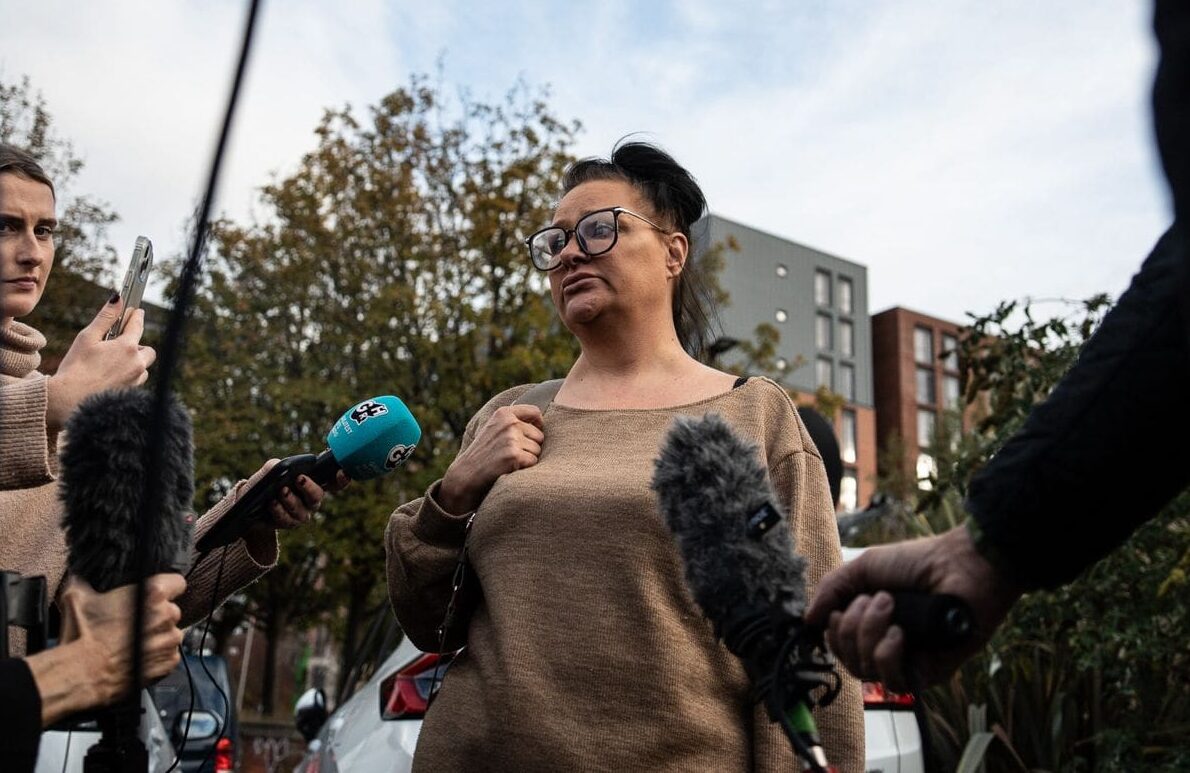
Photo: Caroline Willgoose via Jimmy Tse
After her son was stabbed to death in 2025, Caroline Willgoose transforms her personal tragedy into a fight for change. Through her story, Uproute explores why more needs to be done to tackle knife violence in the UK.
The moment she learned her son had died, was something no mother should ever have to experience.
“It was just surreal,” she says, “the screams of when you first go and see him was horrendous. It’s not a normal cry, it’s a harrowing cry.”
Dealing with grief
Caroline Willgoose, 51, from Sheffield, lost her son Harvey on 3 February 2025 after he was stabbed by his fellow classmate in the school playground.
The day he was murdered, Harvey decided to go to school, despite dealing with anxiety which kept him from attending on multiple occasions.
“I wasn’t even bothered about him going to school, we were arguing all the time, it was making him ill, so we just decided he’s not going,” she says.
“Then that day, he said, I’m going to go. So I followed him down the stairs and he said, Mum, I’m going to school on my own, are you proud of me? I said I am, love. I followed him to the door, he told me I love you, mum. That was the last I saw of him.”
The decision to channel her grief into something meaningful was made within days of Harvey’s death, as she reflected on this moment, a look of determination, and a hint of a smile crossed her face.
“I remember being laid in bed, coming down and I think this was two days after it happened. I said, I want knife arches in schools, I’ve got to do something. Seeing these kids in suits crying, they don’t know what to do and they shouldn’t be going through this grief in their life and I thought, no, things have got to change for them,” she recounts.
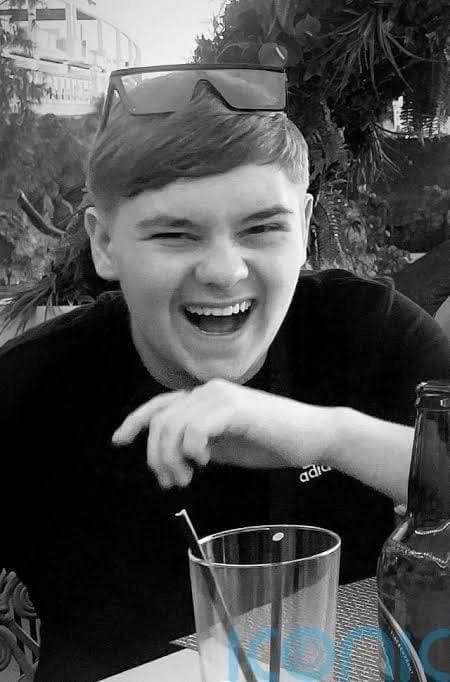
Harvey was stabbed by 15 year old Mohammed Umar Khan through the heart at 12.15pm with a hunting knife at Sheffield’s All Saints Catholic High School.
Khan appeared at Sheffield Crown Court on 30 June 2025 when the trial began, and lasted a gruelling six weeks until he was found guilty of murder on 8 August.
It’s natural to assume, when a mother loses her child in such a devastating way, her grief would be accompanied by a feeling of blame towards the perpetrator. Caroline’s response was strikingly different, and admitted she hasn’t ‘got any feelings for him at all’. She says “maybe they’ll come, but I think he’s been let down.”
Inside court, it was revealed that Khan had been found with an axe in his bag in December 2024. “When the police went to get the axe, if they’d have looked on his phone, they’d have seen he’s got an unhealthy interest in weapons. But it was swept under the carpet, and I’ve been let down massively, but so was he,” she claims.
“During the trial I didn’t go in the gallery much because it was hard for me to listen to people talking about my son, but when I did, he [Khan] just used to stare at me. Whether it was a mask of a frightened child that’s living a horrible life, I just don’t know.”
Binning Knives Saves Lives
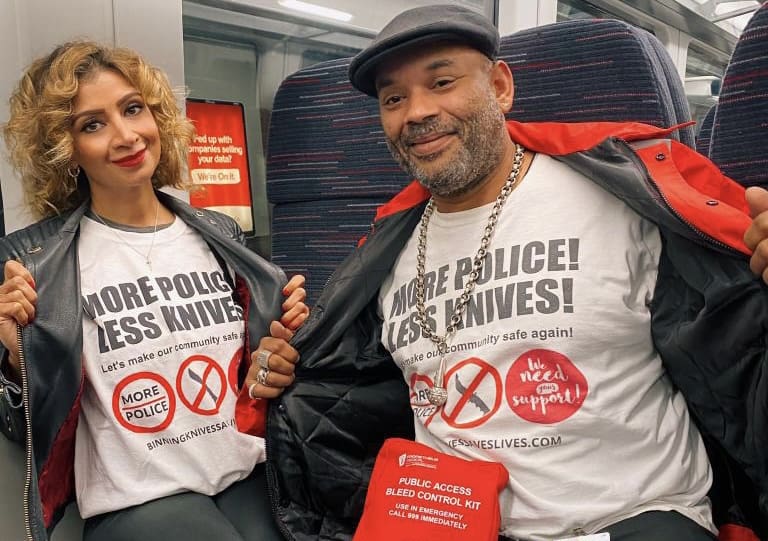
Caroline’s campaigning led her to meet a man named Courtney Barrett, who founded the campaign ‘Binning Knives Saves Lives’.
Courtney, 51, from Waltham Forest in London launched his campaign in early 2019 when he saw the rise of crime in his area.
“I can’t remember if it was the first or second worst borough in London, but there was knife crime going on. Jodie Chesney got murdered, Ricardo Fuller got murdered, so it was obvious we had to do something as a community to fend for ourselves,” he says.
Courtney, named as ‘The Knife Man’ on social media, fights to get knives off the streets through amnesty bins, educational outreach and funding for bleed kits. His campaign has resulted in 1,300 knives being removed from streets and gaining support for bereaved families.
He says, “To begin with, it was just to get knives off the streets, and then once I started the campaign, I started learning a lot about knife crime and the facts and figures. So instead of just going on the streets, we started knocking on doors and educating parents.”
The secret to creating noise around this is to ‘give hope’, he says, “When you’re dealing with kids on the street, if you ain’t genuine, forget it. You can’t do what I do.”
At the end of November 2025, Courtney and Caroline joined together in Sheffield to hand out bleed kits to schools.
“The idea of a bleed kit is to stop the bleeding. Forget everything else in life, stop the bleeding,” he says. “What you’re waiting for when you call an ambulance is one of these kits to come, so it’s good to have them accessible to the public instead of having to wait for one in an ambulance.”
Working with bereaved parents can take a toll on his own mental health, he says “It’s kind of the norm, but the problem is, working with so many families you get attached to them and you have to watch funerals and you feel like you’re missing someone who you’ve never really met.
“So that gets really hard mentally, you know, emotionally.”
So far, Caroline has delivered 30 kits to schools across Sheffield. She spoke emotionally about what this achievement means to her.
“I feel like Harvey’s with me all the time. Children are reaching out to me, and that means a lot because I’m giving them a voice, a bit of hope, that you know, we’re listening now,” she says.
“I am proud of myself and proud of our Harvey because he is changing the world, and it’s because of the kind of kid that he was that’s keeping me going. He just cannot be forgotten.”
The Statistics
In the year to March 2025, 51,527 offences were recorded involving a sharp-instrument, most commonly, a knife.
Whilst this is just a statistic, real people lay beneath the numbers and experience the devastation knife related violence causes.
The data, sourced by the Office for National Statistics (ONS), gives little insight into the real-life trauma families, friends and communities face when losing someone to knife crime.
However, a recent study showed there has been a 6% decrease in homicide offences in the last year, which was due to a 21% fall in knife or sharp instrument homicides.
Perhaps the impact of campaigning is finally making a real difference in the UK.
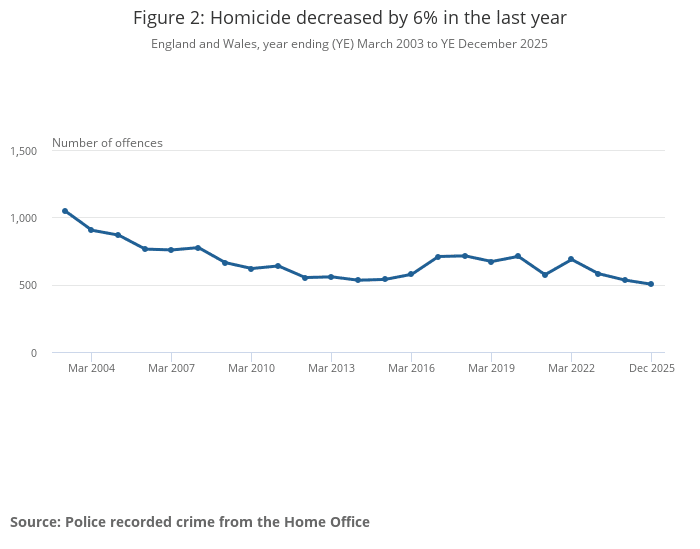
Statistics show, those who carry a knife are more likely to become victims themselves, which is why it is vital that more people understand the level of risk you put yourself in, when deciding to pick up a knife.
Dr Simon Harding, 65, Director of Criminology Services Ltd, who specialises in youth violence and drugs research, says the most common misconception about knife crime is that all kids are involved.
“I’m very much against demonising young people, that’s straight off the bat. However, there are certain groups in certain areas for whom carrying a knife is all too easily done,” he says.
“There’s not enough funding going into researching all of this, it’s a total waste of time. As a criminologist, professor and a researcher, I can tell you I have struggled to find pennies to research this. There is simply not enough money going into it.
“However, I’ve interviewed more gang-affected, gang-involved young people than anyone else in Britain, and the readiness to pick up a knife is extraordinary.”
Dr Harding’s solution, or ‘the only way to deal with it’, is “to heavily invest in tackling crime, and heavily invest in environments of poverty, deprivation and inequality,” he says.
Campaigners, including Courtney, call for better education on this issue and argue schools are failing to inform people on the matter. Dr Harding emphasises this and says, “They’ve got a huge role to play and they’re not doing enough. I interviewed a 15 year old boy last week, he didn’t even know cannabis was illegal, and he’d been stabbed and lost two of his friends.”
Courtney Barrett shares the same belief, “The root cause of knife crime is lack of knowledge,” he says.
Moving Forward
For Caroline, failure of education isn’t something abstract, it’s the reason she is campaigning. If more was done by schools, police and government; what happened to Harvey might have been avoided.
Looking back on the past year, Caroline says, with tears filling her eyes, she feels like Harvey is with her all the time.
“Sometimes I feel good, and there’s so many signs he sends me. If I feel down, it’s like he’s saying, give me a minute and I’ll lift you up. This morning I wasn’t great, and then I got a message from a woman in Wales about how amazing she thinks I am. She says you are changing things, and getting messages like that keeps me going.”
Whilst Caroline’s strength is truly inspiring, the impact of such a loss is not dismissed. This case is only one, amongst hundreds of others, where lives have ended due to a stabbing.
Dr Harding says he ‘despairs’ for bereaved families, “I really don’t know how they get by, why there isn’t a national conversation with young people I simply don’t know.”
Knife violence is ultimately the thing that broke Caroline Willgoose, but in some ways, it’s also what keeps her motivated to get up everyday, and regain life back to make a difference, for Harvey. “My body is shielding me from the grief,” she says, “I know it’ll come, but at the minute, I’ve got a job to do, and it’s Harvey that’s carrying me through.”