

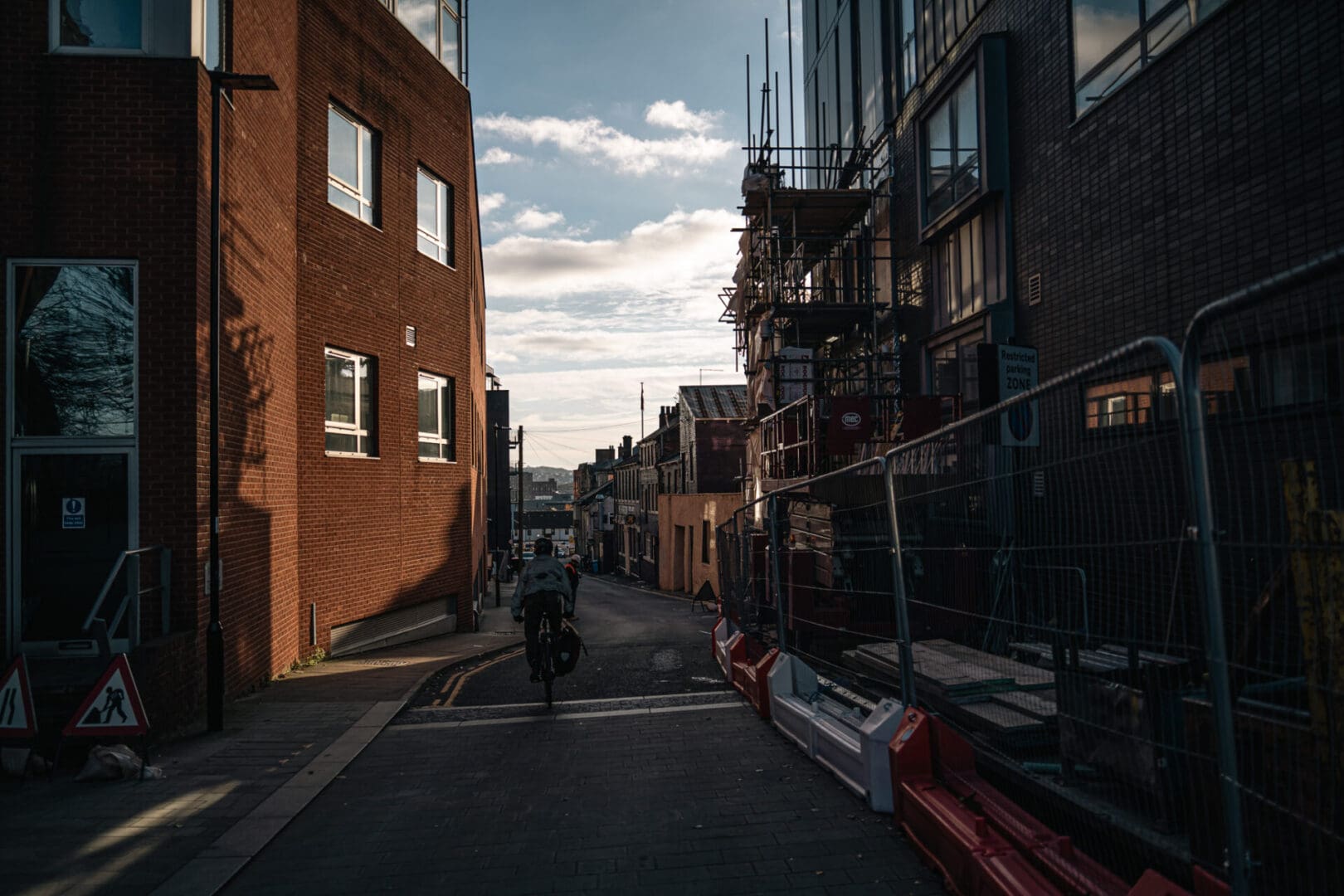
Photo: Tse Chun Ming / Uproute
Here at Uproute, we have spoken to countless people whose lives were changed by finding the right community at the right time.
Whether through a support group, creative project or local community centre, these spaces often provide the foundations for recovery, wellbeing and belonging. Yet despite their importance, there is currently no legal requirement for councils to ensure these spaces exist or remain accessible.
Across England, community facilities have closed, funding has been reduced and many organisations now struggle to find affordable places to operate. More than 1000 youth centres have closed since 2010, and funding has reduced by 73%. Services that were once pillars of the community are being cut and diluted further to the point where the services rely entirely on volunteers, or there is no longer a service at all. The NHS now uses social prescribing, referring people to activities such as walking groups, art groups and community activities to improve wellbeing and reduce isolation.
These programmes depend on community spaces being readily available. This won’t be able to continue if demand and signposting from the NHS increase and funding and accessibility decrease.
That is why Uproute is launching a campaign for a Community Space Access Standard.
The proposal is straightforward:
Every person should have access to a free or low-cost community space within a 15-minute walk of their home, or via accessible public transport.
Under the proposal, councils would be required to assess community space provision, identify gaps in access, protect existing facilities and replace community spaces lost through redevelopment.
We believe community spaces should be treated as essential infrastructure. No one should be left without somewhere to go, connect, recover or rebuild their life.
- 1. Overview
- 2. The Problem
- 3. Proposed Legislation Change
- 4. Definition of Community Space
- 5. Responsibilities of Local Authorities
- 6. Funding Mechanisms
- 7. Alignment with Existing Policy
- 8. Expected Outcomes
- 9. Conclusion
This campaign proposes the introduction of a Community
Space Access Standard in England, placing a legal duty on local authorities to ensure that all residents have access to a publicly available community space within their local area.
Community spaces, including centres, halls, libraries and creative hubs, play a vital role in supporting mental health, recovery, social cohesion and community resilience. However, there is currently no legal requirement to ensure these spaces exist or remain accessible.
Despite recognition in planning policy that community facilities are important, provision is inconsistent and declining.
- There is no statutory minimum standard for access to community space
- Local authority funding for youth and community services has significantly decreased
- Hundreds of community facilities, libraries and day centres have closed in the past decade
- Many support groups and community organisations struggle to find affordable, accessible venues
As a result, individuals — particularly those experiencing addiction, homelessness, mental health challenges or social exclusion — are increasingly left without safe, supportive environments.
The campaign calls for the introduction of a new statutory duty requiring local authorities to meet a minimum standard of community space provision.
Core Requirement:
Every resident must have access to a free or low-cost community space within a 15-minute walk (approximately one mile) of their home, or via accessible public transport.
For the purposes of this legislation, a community space is defined as:
A publicly accessible, multi-use venue that supports social, cultural, educational or recovery-focused activities.
This may include:
- Community centres
- Libraries
- Youth centres
- Church or faith-based halls (where publicly accessible)
- Charity-run hubs
- Recovery meeting spaces (e.g. for addiction support groups)
- Arts and creative spaces
To qualify, spaces must be:
- Open to the public or local community
- Affordable or free to use
- Suitable for group activity and support services
Local authorities would be required to:
5.1 Assess Provision
Map existing community spaces within their area
Identify gaps in provision based on population density and accessibility
5.2 Ensure Access
Maintain or develop sufficient community spaces to meet the 15-minute access standard
Work in partnership with charities, voluntary organisations and community groups
5.3 Protect Existing Spaces
Prevent the unnecessary loss of community facilities
Where closure or redevelopment occurs, ensure equivalent replacement provision within the same local area
To support implementation, funding would be drawn from:
- Developer contributions (Section 106 agreements / Infrastructure Levy)
- Local authority budgets allocated to community services
- Partnerships with voluntary and third-sector organisations
- National funding streams, where appropriate
This ensures that community infrastructure grows alongside housing and population increases.
This proposal builds on existing frameworks, including:
The National Planning Policy Framework (NPPF), which promotes healthy and inclusive communities
The Localism Act 2011, which enables protection of community assets
NHS social prescribing initiatives, which rely on community-based activities
However, it goes further by introducing a clear, enforceable standard, rather than guidance alone.
The introduction of a Community Space Access Standard would:
- Improve access to support networks and recovery services
- Reduce social isolation and loneliness
- Support mental health and wellbeing
- Strengthen local communities and social cohesion
- Provide preventative benefits in areas such as crime reduction and public health
Community spaces are essential social infrastructure, yet their provision is currently inconsistent and unprotected.
By introducing a legal standard for access, this policy ensures that no individual is left without a place to go, connect, or rebuild their life.
RELATED STORIES:

Hackney Mosaic Project: Rebuilding lives piece by piece
Photo: Tessa Hunkin At a community mosaic project in Hackney, volunteers rebuilding their lives through art now face an uncertain future as plans to repurpose their space threaten the support network they’ve come to rely on. Among fragments of coloured tile and...

Could you reach a community space in Sheffield?
Photo: by Graham Hogg For a city with hundreds of community venues, Sheffield can feel surprisingly unequal depending on where you live. As part of our Community Space series, Sheffield is the first that we will break down to understand the scope of its community...
They saved more than bricks
Trigger Warning: The following article mentions suicide. Burrowed in the centre of a town down on its luck, Park Centre has suffered from a lack of investment. But now a community has joined together, desperate to save it. It’s a story that extends beyond the borders...
Behind the red brick walls: inside Sheffield’s St Wilfrid’s Centre
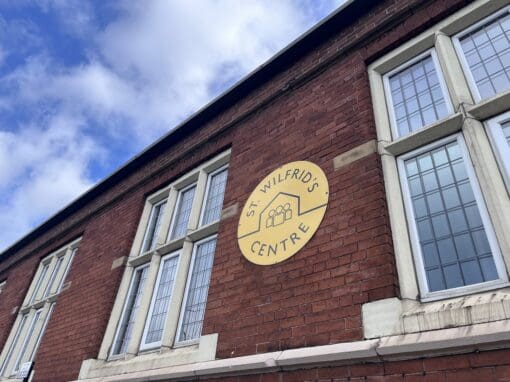
At a time when loneliness, homelessness and social exclusion are affecting people across the UK, Uproute steps inside St Wilfrid’s Centre to explore how small moments of connection can help people rebuild their lives. From the outside, St Wilfrid’s Centre looks almost...