

Photo: Via Wikimedia Commons
‘Preventing Harm, Promoting Recovery’ is the name of Scotland’s new plan to tackle alcohol and drug harm, but how does this compare with England’s?
On 10 March this year, the Scottish Government published a lengthy report ‘grounded in a human rights approach’, outlined by the Charter of Rights for People Affected by Substance Use.
The plans set out a broad approach to addressing alcohol and drug harms, with a focus on putting people first, early intervention, treatment and care.
In 2024, Scotland’s drug and alcohol deaths remained the worst in Europe, so perhaps a change in strategy is positive, and if successful, will help those who struggle with these issues.
Patricia Tracey, Head of Alcohol and other Drugs at Turning Point Scotland, said: “We welcome the launch of Scotland’s Alcohol and Drugs Strategic Plan 2026-2035 that is underpinned by a compassionate, evidence based and human rights informed approach.
“We are in the unique position of working across all these areas and know first-hand the need for a joined-up approach to meet the wider needs of people living with alcohol and other drug dependencies.
“This response has been built on learnings from previous frameworks and acknowledges the implementation gap between policy and delivery.
“What we need to see now is sustainable investment, accountability and focus to ensure that this strategy saves lives.”
The plan states their commitment to ensuring the voices of people with lived experience shape the design and delivery of services, with a locally-led, responsive and sustainable system that is accountable.
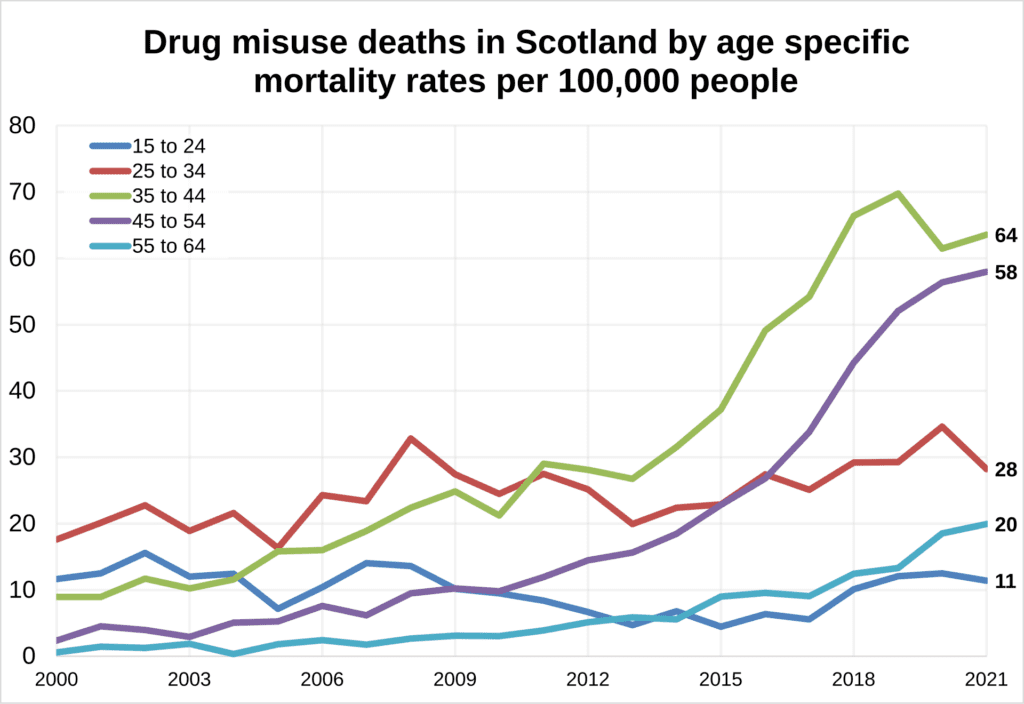
Whilst Scotland is attempting to transform their approach, what is England doing?
In December 2021, the UK government announced their 10 year strategy, called ‘From harm to hope: A 10 year drugs plan to cut crime and save lives’.
This plan sets out three main priorities; break drug supply chains, deliver a ‘world class’ treatment and recovery system, and achieve a shift in the demand for recreational drugs, so already differences between both strategies have started to emerge.
Adam Stevens, 58, Professor of Criminology at the University of Sheffield, shared his expert insight on the subject, and has researched drugs, crime, public health and drug policy making for 30 years.
He said: “Scotland has devolved responsibility for health policy and they’re using that devolution to go in quite a different direction, both to the UK government but also to what they used to do 10 years ago.
“This emphasis on human rights is something we’re seeing across a lot of Scottish policy.
That’s very different from the rhetoric about UK or English drug policy, where you hear very little about human rights and it’s all about crime reduction.”
He explained how the Misuse of Drugs Act impacts Scottish strategy, because it is UK legislation that controls the possession, supply, production and exportation of dangerous or harmful drugs, meaning the Scottish government cannot change this.
Stevens added: “The UK policy was informed by expert opinion and political decisions. There was very little involvement of lived experience, and certainly not a diversity of lived experience, whereas the Scottish policy, there was a deliberate attempt to bring in a range of voices from lived experience to inform the policy.
“The fact is that hundreds of people are dying, and they’re dying unnecessary deaths. All those deaths are preventable.
“Now it’s a matter of opinion and political debate as to whether the things they’re doing are the right things, or whether enough of them are being done.”