Credit: Vietnam Coracle
The newly released trailer for A24’s biopic Tony offers a window into the raw, chaotic origins of chef turned writer and TV personality, Anthony Bourdain.
Watching a young Dominic Sessa navigate the intense heat and adrenaline of a 1970s kitchen is a reminder of how early the culinary world consumed him.
But while the film captures his youth, the most remarkable chapter of Bourdain’s life wasn’t his wild beginning: it was his grueling, mid-life climb out of rock bottom.
Long before he was a celebrated global traveler, Bourdain was entirely trapped on the fringes. Throughout the 1980s and early ’90s, he lived a double life as a talented chef and a severe addict, deeply dependent on heroin and crack cocaine.
His life was a blur of running lines in Manhattan kitchens while managing withdrawals, drowning in massive debt, and watching his personal stability disintegrate.
By his late thirties, the hustle had run its course. Bourdain made the brutal decision to get clean, cold-turkeying methadone. But stopping the drugs was only the first step; the real battle was rebuilding a life from the wreckage.
Channeling the Chaos into Discipline
Credit: James Cann
To survive early recovery, Bourdain relied on the rigid, uncompromising structure of the kitchen. He didn’t find peace in a quiet environment; he found it in the predictable discipline of the line.
He used the culinary concept of mise en place – the strict practice of organizing tools and ingredients before service – as a framework for his entire existence. The repetitive, intense metrics of cooking gave him an external routine to cling to when his internal life felt completely unstable.
It was a demanding, exhausting environment, but the mandatory focus kept him grounded and accountable.
Redefining Survival
Even clean and working full-time, Bourdain was plagued by the consequences of his past.
In his early forties, he was still drowning in debt, completely uninsured, and terrified of the future. He needed an outlet, and he found it in writing.
Every morning at 5:00 AM, before heading to his grueling shift as the executive chef at Les Halles, Bourdain sat in the dark and wrote. He wasn’t looking for fame; he was desperately processing his decades of trauma, writing raw, unvarnished truths about the restaurant underbelly. This daily ritual became his true turning point. It allowed him to reframe his past: transforming himself from a survivor of a chaotic system into the author of his own narrative.
Credit: Wikimedia Commons
ALSO READ: A recipe to rebuilding life in a university kitchen
The Unfinished Journey
When his article “Don’t Eat Before Reading This” was published by The New Yorker, it triggered a chain reaction that resulted in his bestselling memoir Kitchen Confidential.
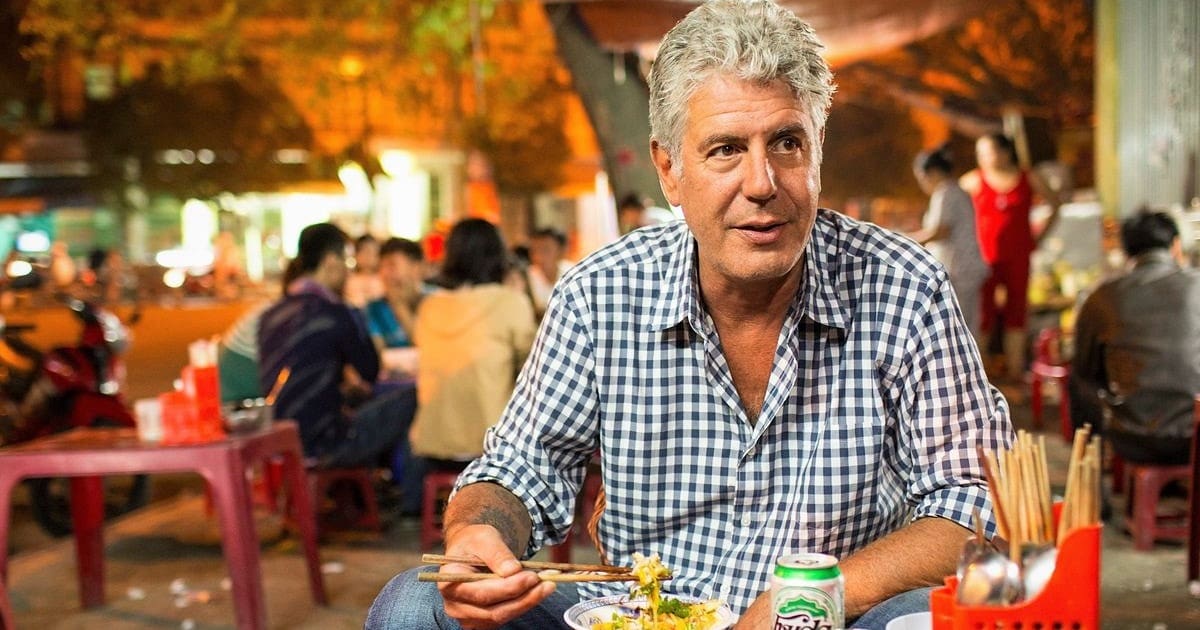
Almost overnight, at age 44, Bourdain was launched into a completely different stratosphere. He transitioned from the kitchen line to international television, using his platform to champion the very people he used to cook alongside: immigrants, line cooks, and marginalized communities worldwide.
Yet, the radical transformation did not mean the battle was over. Bourdain was always unsparingly honest about the fact that recovery is a continuous process, and that the psychological residue of severe addiction and early-life trauma has a long tail.
Despite his immense global success, his internal struggles remained a profound weight, a stark reality that culminated in his tragic death by suicide in 2018.
Bourdain’s true legacy isn’t that he achieved a flawless, Hollywood-style happy ending; it is how he spent his second chance. By stepping into foreign spaces not as an expert, but as a guest willing to listen, he turned the simple act of sharing a meal into a tool for dismantling prejudice.
His journey proves that recovery is not a passive, permanent cure, but an aggressive, daily act of reconstruction. Even with its tragic end, his life remains a powerful blueprint for how to take the broken pieces of an existence and build something that permanently changes how the world sees itself.