Credit: David Tovey
Before becoming an acclaimed artist, David Tovey was a chef in the British Army and a cook for the Queen. He left the army in 1997 due to the fear of his sexuality being discovered.
Years later, after rebuilding as a successful chef and becoming a London restaurant owner, a devastating stroke in 2011 followed by a dual diagnosis of cancer and HIV triggered a total financial and psychological collapse.
Plunged into homelessness and suicidal despair, David turned to raw creativity to stay alive. He quickly went from selling sketches on Spitalfields pavements to debuting a sustainable fashion line during London Fashion Week in 2015, eventually staging massive installations at the Tate Modern, Saatchi Gallery and countless spaces across the UK in the last decade.
Today, alongside being an internationally-recognised artist, Tovey is also a celebrated activist, using his platform to challenge public policy around homelessness and veterans’ rehabilitation. Uproute sat down with Tovey to discuss the realities of the streets, and how art saved his life.
Trigger Warning: The following interview contains mentions of suicide.
Q. You’ve done an incredible journey through life. Was art something that was always present when you were growing up, or did it come later?
David Tovey: “It was always there. I come from a really poor family; we grew up in quite severe poverty in the dog end of Kent where there isn’t a lot of opportunity. There was never a lot of money about. But my mum was a really good artist. She also taught me how to cook, how to knit, all the basics of art and I remembered all of it. I loved drawing. I had a real thing for panthers, leopards, and big cats. I don’t know what it was about them! As all things growing up, I gradually lost my passion for it, especially in the army.”
Q. You went through a massive accumulation of health crises and mental trauma starting in 2011, leading to your homelessness in 2013. What is the physical reality of living out of a small car when your health is already completely failing?
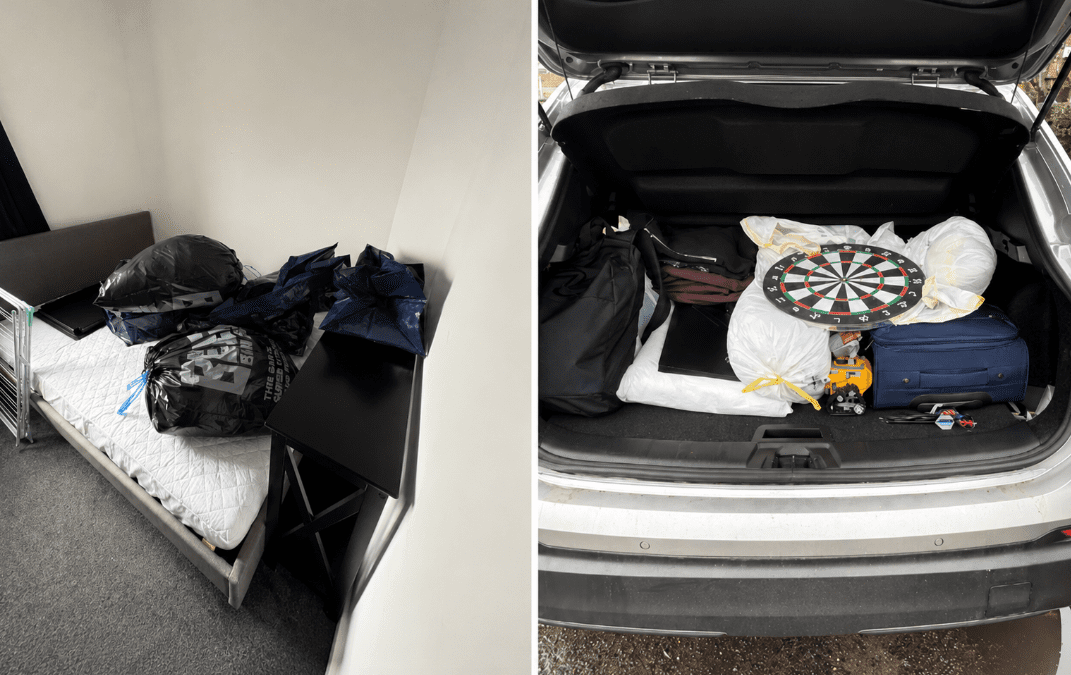
“Being 6 foot 3 and living in a Peugeot 206 isn’t great. It’s a very small space. I had no other choice, and at least I had a car; most people on the streets don’t even have that. For the next six months, I just completely deteriorated. I couldn’t take any of my medications because I was living on the streets. The depression took over and then the cancer came back. It was a total tsunami of shit.”
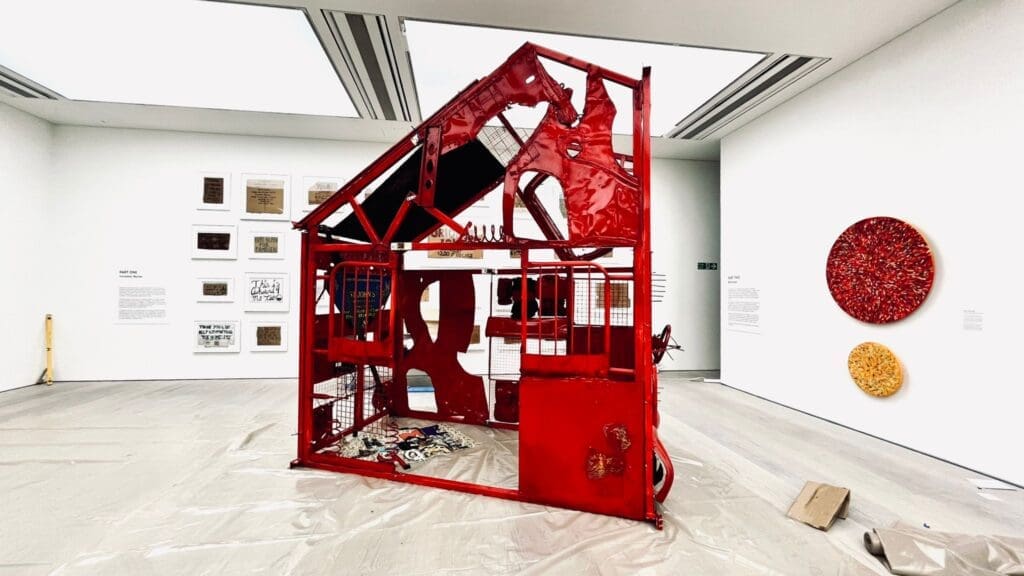
David Tovey’s Home 2013, made using parts from his Peugeot 203 was exhibited at the Saatchi Gallery as part of Homelessness: Reframed in 2024.
Q. How did the first inkling of change come about in your life?
“One night in 2013, I had just been thrown out of the council housing office in Islington and I was so angry. I just thought, ‘Fuck it, I’m going to end this right now.‘ I went into a park and started trying to take my own life when this guy, Gavin, appeared out of nowhere in the dark. He looked at me and said, ‘What the fuck are you doing, man?‘ Nobody had asked me that before. I just broke down and cried on a bench with him for two hours straight.
“He gave me some money, got me into a cold weather night shelter for the following day, and handed me a piece of paper with the address of Pillon Trust, a homeless charity. He said, ‘It’s up to you, mate. You can either carry on doing what you’re doing, or if you really want to change, they’ll help you out.‘
Q. Did the weight of the ‘homeless’ label hold you back at all?
“I nearly didn’t go to the shelter because I was too petrified. Going there meant I finally had to admit to myself that I was homeless. Asking for help was the hardest thing I’ve ever had to do. I didn’t want to do it. I had this proud mentality of, “No, fuck it, I got myself into this situation, I’ll dig myself out.‘
“But sometimes in life, it doesn’t matter how flipping good or strong you are, you need help. I will always ask for help now because I’ve seen the absolute devastation it causes when people don’t.”
Q. What were the first days of moving into a shelter like?
“I stayed in a cold weather shelter for three days before my entire body just collapsed from the strain of. I was rushed to the hospital on life support. The doctors told me that if I had stayed out on the streets for another two days, I would have been dead anyway.
“What kept me going through was the fact that I was still trying to go to university to do an art degree. But the only way the system would allow me to get off the streets and into a housing hostel was if I officially quit my university course. That fucking killed me. I hated it because uni was the only consistent, positive thing I had to hold onto.”
Q. What was your experience like navigating the homeless hostel system once you left the emergency shelter?
“When I was first transferred from the cold weather shelter into a hostel room, I walked in and walked straight back out. There was literally human feces rubbed all over the walls. I told the staff, ‘I’ve literally just come out of the hospital on life support and you expect me to live in this?‘ They told me to clean it myself. I chose to move back into my car for a few days until they sorted out a different hostel.
“More unhoused people die inside hostels than in any other part of homelessness because they are completely unsafe. You have people fighting, shared rooms, intense violence, open drug addiction, and heavy booze, the spaces are completely uninhabitable. The councils and the government routinely put people into places where, if you put your own family there, you would be criminally prosecuted by the state.”
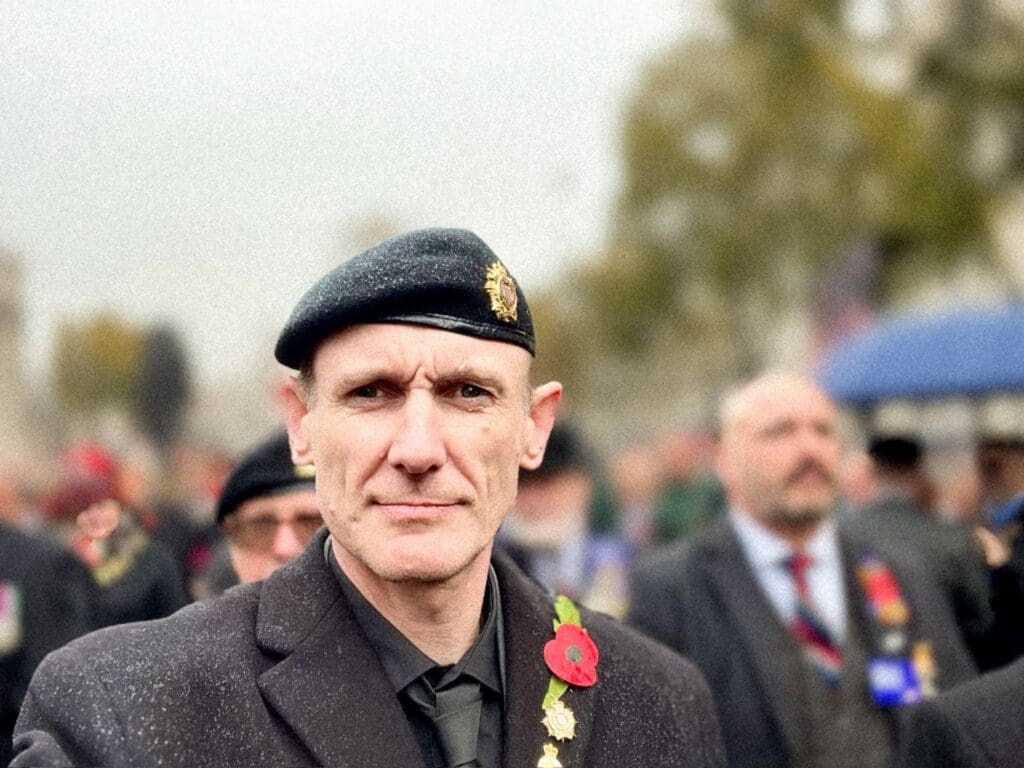
David Tovey served in the army from 1991 to 1997.
Q. How did art help you throughout this process?
“When I had to drop out of university to secure shelter, I suddenly didn’t have an academic course to make art for anymore. That’s when the purpose shifted entirely: art became the thing that was keeping me on the rails, giving me a tiny bit of personal space, and allowing me to be myself. I was just scribbling down my anger in my sketchbook.
“It helped me take the absolute chaos, anger, and pain inside my brain and hone it into something physical. People look at them and just see a black pen on paper, but for me, that’s where the process of picking myself back up started.”
Q. At what point did art become more than just a personal tool of escapism?
“When I finally settled into the main hostel where I stayed for a year, the room was tiny, and painted this awful, depressing blue. It didn’t have a single picture on the wall. So I went down to the hostel office, borrowed a pen and some printer paper, and started drawing these little fat spacemen. I started pinning hundreds of them all over the blue walls. It gave me something to do, helped refine my chaos.
“From there, I was doing an illegal exhibition in Spitalfields one day when a guy named Charlie walked past, loved the style and asked to use them for his clothing line, Hopeful Traders. We ended up selling thousands of t-shirts and jumpers and made a hell of a lot of money, and suddenly I started getting noticed. That eventually led to the Tate, Saatchi and many installations.”
Q. Your breakout installation at the Tate was A Soldier’s Story, which featured real military uniforms worn by veterans who became homeless. What was the reception like?
“A Soldier’s Story was a literal firing squad of mannequins dressed in real British military uniforms. Stitched onto them were the specific, raw case studies of what happened to these individuals from the moment they were in the forces to the moment they became homeless on the streets.
“Art has this immense power to pull everyday people into an emotional space they would normally avoid. I watched a massive, incredibly tough American Marine stand in front of that firing squad and just cry his eyes out. A woman collapsed on her knees sobbing in front of the soldiers. She told me her son had been a soldier who took his own life, and the artwork had finally answered why after all these years. Hearing that made me completely break down and bawl my eyes out right there in the gallery. It made me realize that I could truly make art that matters.”
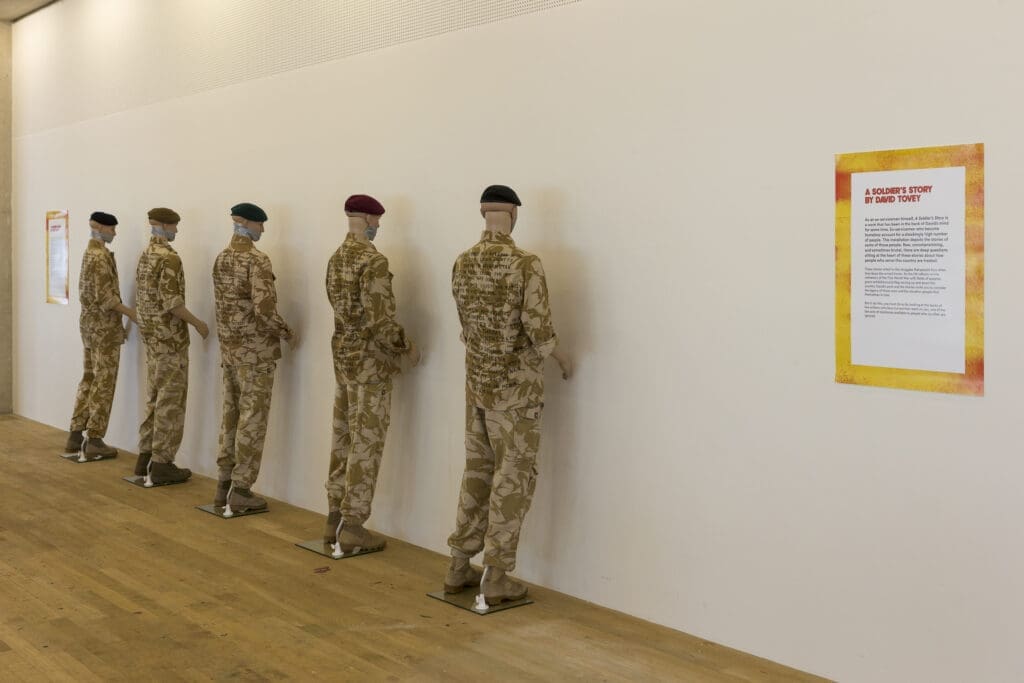
A Soldier’s Story features mannequins dressed in British army uniform with raw case studies stitched on their backs.
Q. How has your experience with homelessness shaped both your identity as an artist and the message behind your work?
“Art didn’t just give me a career; it gave me, me back. It gave me the person I wanted to be but never had the choices to be. My art exists to force the world to look at the exact stories and human beings that the system tries to censor and throw away.
“I’m proud that I was homeless and proud that I fought my way out, because over a thousand unhoused people are dying on British streets every single year while our nation watches. They do it because they don’t value you. They prejudge you as a total bum before you’ve even opened your mouth. Having that ‘homeless tag’ creates massive barriers. But I’m stubborn – I don’t believe in barriers. Society is just systematically designed to make escaping homelessness near impossible. If someone manages to get out of it, I’d employ them on the spot because it proves their resilience, confidence, and agency.”
To find out more about David Tovey’s work, visit his website here.