
For nearly a century, the music industry has operated under a dark, unspoken contract: active substance abuse is not just tolerated; it is structurally subsidized.
It is written into backstage riders, normalized in late-night green rooms, and heavily romanticized by fans who demand their icons live on the edge. The myth of the tragic genius – the idea that great art requires chaos and self-destruction – has claimed generations of legendary artists across every single genre.
But a powerful counter-narrative is taking hold. Some of the most influential musicians in the world are publicly rejecting the party lifestyle, proving that stepping away from the bottle isn’t a career killer, it is the ultimate creative catalyst. By looking at five iconic artists who survived the music industry’s heaviest vices, we see how sobriety unlocked their greatest work.
1. Trent Reznor (Nine Inch Nails)
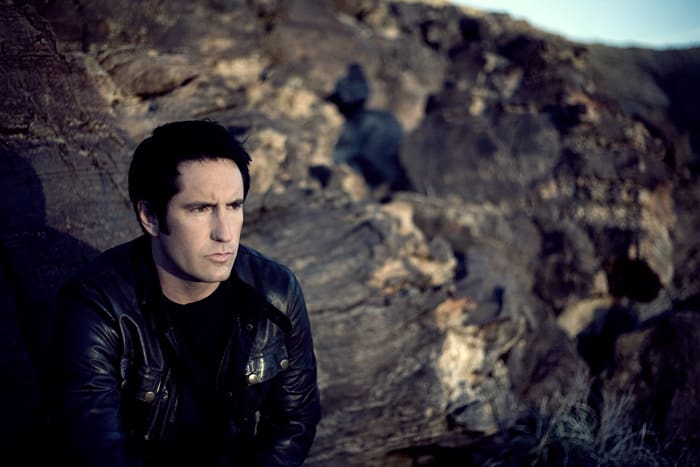
Reznor entered rehab in 2001. Credit: Nine Inch Nails.
At the height of Nine Inch Nails’ global success in the 1990s, frontman Trent Reznor was locked in a severe, isolating spiral of alcohol and heroin addiction. By his own admission, he was trapped in a character he had created, using substances to cope with sudden fame and profound social anxiety.
Following a near-fatal overdose in London, Reznor entered rehab in 2001. The collective fear among fans and Reznor himself was that sobriety would dull the anger and raw intensity that fueled his industrial rock masterpieces.
The reality proved the exact opposite. Since getting clean, Reznor has enjoyed one of the most prolific creative runs in modern music history, successfully transitioning into an Academy Award-winning film composer.
Reflecting on this transition in an interview covering his creative pursuits with Fast Company, Reznor recalled how heavy the process used to be when shrouded in addiction, stating, “Getting sober and getting my life in order has really changed my perspective on the creative process. It used to be fraught with fear. I would try to trick myself into avoiding working, because it was the most difficult, painful self-examination imaginable.”
2. Eminem

The rap icon checked into rehab and achieved total sobriety in April 2008. Credit: U.S Department of Defence
In the mid-2000s, Marshall Mathers was consuming up to 30 prescription pills a day to cope with the grueling demands of touring and fame. The addiction culminated in a near-fatal 2007 methadone overdose that left him hours from death.
Realizing he was on the verge of leaving his children behind, the rap icon checked into rehab and achieved total sobriety in April 2008. For a lyricist whose entire brand was built on volatile, chaotic energy, re-learning how to create art with a clear mind was an agonizing, mechanical process.
Eminem channeled that exact struggle into his comeback music, treating his multi-platinum album Recovery as an audio journal of his brain rewiring itself. Sitting down for a vulnerable retrospective on his recovery process via SiriusXM’s Paul Pod, he described the intense reality of stepping back into the studio with a completely clean system, admitting that it took a long time for his brain to start working properly again as he slowly had to relearn how to rap from scratch.
3. Florence Welch

In 2014, Welch chose to go completely sober. Credit: Coke Live Music Festival
When Florence Welch exploded onto the indie scene, her ethereal, powerhouse vocals were matched by a wild, chaotic public persona. Behind the scenes, however, Welch was using alcohol as a shield to mask severe performance anxiety and social phobia.
In 2014, Welch chose to quiet the noise and went completely sober, a shift that fundamentally transformed her live performances by giving her stratospheric vocal control.
ALSO READ: Brain changes may help explain alcohol addiction recovery, study finds
Speaking about the myth of the suffering artist in her acclaimed personal essay for British Vogue, Welch flatly rejected the idea that she needed her addiction to make art, writing, “I don’t believe in self-destruction as a means to creativity any more. And the less preoccupied I am with what I look like or what I did last night, the more energy I have to give to my work. I managed to be successful despite my demons, not because of them.”
She expanded on this realization in an interview with The Guardian, noting, “Before, I thought I ran on a chaos engine, but the more peaceful I am, the more I can give to the work.”
4. Slash
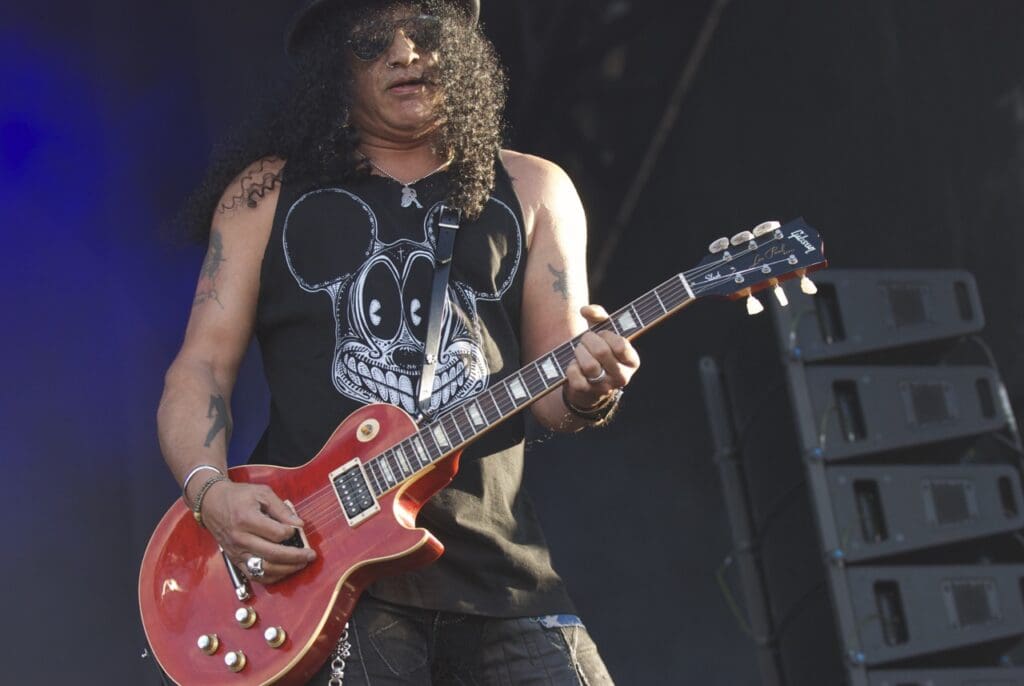
Slash dealt with severe, dual addictions to alcohol and heroin. Credit: Mike Bouchard
As the lead guitarist for Guns N’ Roses, Slash was the literal definition of a hard-living rockstar, playing through stadium tours while dealing with severe, dual addictions to alcohol and heroin. By 2006, the physical toll had brought him to a breaking point, prompting him to choose total sobriety.
For a player whose blistering riffs were historically fueled by backstage debauchery, stepping back into the studio clean dismantled the fear that his musical identity relied on intoxication. Instead of blunting his performance, sobriety unlocked a highly disciplined era of songwriting, fueling his solo career and the eventual, massive Guns N’ Roses reunion tours.
Speaking to Loudwire about how his creative focus shifted after getting clean, Slash dismantled the myth of the buzzed musician, explaining: “When I got sober, all that effort that I put into what turned into a massive addiction at that point, I took all that and just put it straight back into the music and it wasn’t really reliant on me being buzzed, or should I say inebriated, to be able to create stuff. I was fortunate. I really just put everything into writing and felt really comfortable sober [and] writing.”
5. Elton John
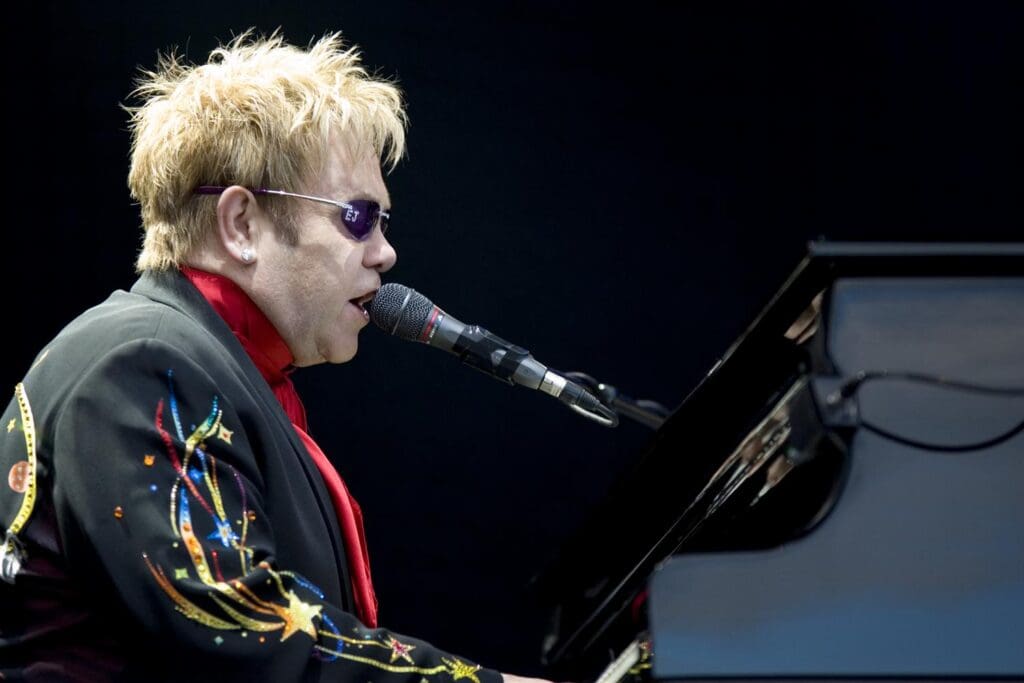
He sought help in 1990 after realizing his lifestyle was a countdown to a tragic end. Credit: Richard Mushet
Throughout the 1970s and 1980s, Sir Elton John was the poster child for rock-and-roll excess. His severe cocaine and alcohol abuse were legendary, often completely shadowing his immense musical talent. He finally sought help in 1990 after watching the devastating impact of the AIDS epidemic on young friends, realizing his lifestyle was a countdown to a tragic end.
Since getting clean over three decades ago, Elton John’s career didn’t just stabilize, it skyrocketed into historic global tours, award-winning theater scores, and an elder-statesman status. Recognizing how lonely the road to recovery can be in the music business, he has spent decades quietly acting as a sponsor and mentor to younger musicians navigating early sobriety under the harsh glare of fame.
Marking his milestone 30th sobriety anniversary on X, Elton looked back at the absolute necessity of hitting his breaking point, stating bluntly, “If I hadn’t finally taken the big step of asking for help 30 years ago, I’d be dead.” He would later expand on that terrifying transition in a major reflection piece with Variety, detailing how leaving treatment felt like a profound rebirth: “When you come out of treatment, it’s like being reborn. You are so stripped down and completely vulnerable. It’s like starting life over with a new rule book for living.”
With sobriety a rising movement in the music and entertainment industry broadly, more and more artists are joining these five in reclaiming their creative soul, proving that the intense emotions, the vulnerabilities, and the creative sparks required to make timeless music don’t live in a bottle or a syringe. They live in the artist.