Photo: Paul Hannaford via Facebook
Content warning: This article includes graphic images and descriptions of injury and references to drug addiction, which some readers may find upsetting.
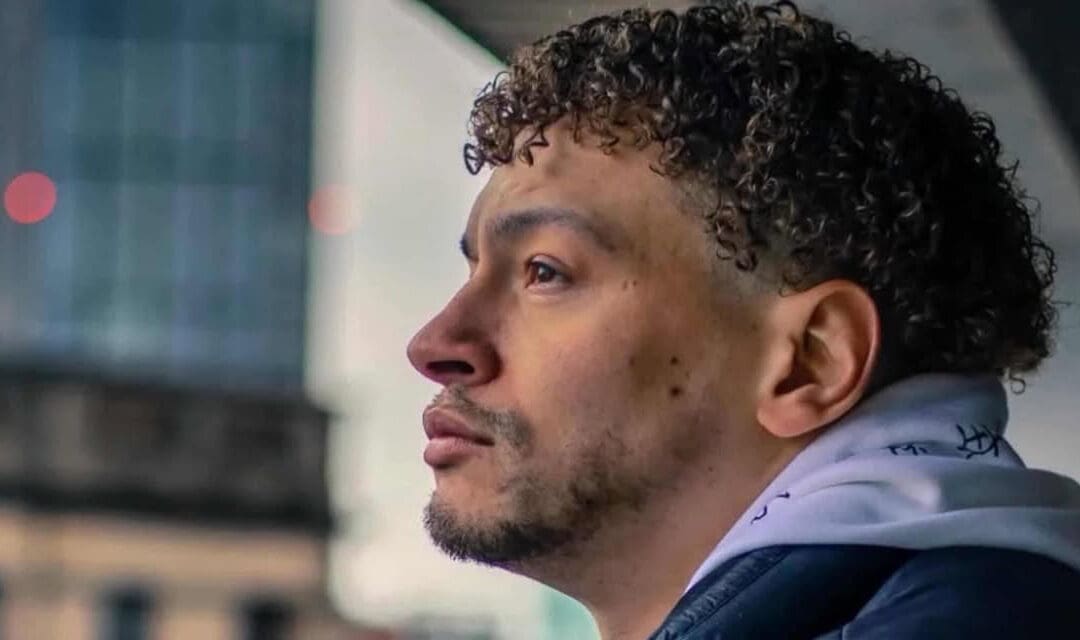
After 22 years of drug use, prison and gang involvement, Paul Hannaford was given days to live. Now nearly 20 years sober, he tours UK schools warning young people about addiction, gangs and knife crime.
When I think of addiction, it is always framed like a nightmare. A vision of what could happen if you push something too far. The horror stories of descending into crime, homelessness, and dependency ring in my ears like a shrill warning. But for Paul Hannaford, a drug awareness advocate and sober for 20 years this December, the nightmare was a reality. He carried a knife in his teenage gangs, he was kicked out of school, in and out of prison, in and out of drug dens, and he has the scars to prove it.
What started as peer pressure and one breath of marajuana became a demanding cycle of crime, drugs, and wounds that are still bleeding to this day. However, given the option of dying in a crack den with bleeding, infected wounds covering his legs, Paul Hannaford chose to mend himself. And from that journey, rose a dedicated activist, protecting children from going down the path he did, one school at a time.
A childhood shaped by drugs and gangs
“When I was in primary school, the only drug I was really aware of was alcohol. But then, with the boys I was hanging around with, I started trying cannabis, and then got more curious,” says Paul Hannaford.
“My environment didn’t change. My environment was always there. But at 13 and being out and about, I was amongst it”
In the beginning, Paul never thought he would have a problem with addiction. But, they call them gateway drugs for a reason. As of last year, half of 17-year-olds in the UK have engaged in binge-drinking, 1 in 3 having tried cannabis and 1 in 10 having tried harder drugs, such as cocaine, ecstasy and ketamine. Adolescent drug use has also increased by over 40% among school pupils since 2014. With each step deeper down the rabbit hole of drug use, it becomes harder and harder to pull yourself back up. Curiosity may kill the cat, but it also gets teenagers hooked on more and more serious drugs.
As the company Paul was keeping got worse, he veered away from the path his life was taking up until that point. At 13, he was kicked out of his secondary school, moving into an alternative provision, the last chance at education when the mainstream institutions fail, and was shoplifting every day to get money for drugs. As he continued using drugs, Paul became dependent on getting high every day; as his peers were learning English for their O-Levels, Paul was beginning to work his way up the drug classification alphabet.
“I think the problem I had at that point was I liked it. And when you like something, you will try again. That’s where it began.”
At 14, he was already experimenting with harder drugs, taking amphetamines, Magic Mushrooms, and LSD, which he later overdosed on twice. Instead of studying regular subjects, Paul stole a book from the library on psychedelics, learning how to find them and the best ways to get a buzz out of them. By 15, he had served three prison sentences.
However, as this pattern continued into his 20s, the addiction was, all-in-all, manageable. Sure, he was committing crimes every day, needed to drink to wake up, and was far from getting help, but to the outside world, he looked like anyone else. He could maintain appearances, get regular showers, brush his teeth, have access to food and clean clothes. But, at 21, with the introduction of heroin and crack into his life, that all changed.
When heroin and crack changed everything
“When you’re taking heroin, you don’t eat, you lose weight, you lose interest, you lose your moral compass. You know, I stole from my family. I didn’t care about anybody. It’s a really selfish drug.”
In England and Wales, there are over 1,400 heroin and morphine-related deaths registered each year. Overall, opiates and opioids are involved in just under half of all drug-poisoning deaths. It’s not just the change in behaviour that occurs when you take the drug that’s the problem, it’s the toll on your body that is the real damage.
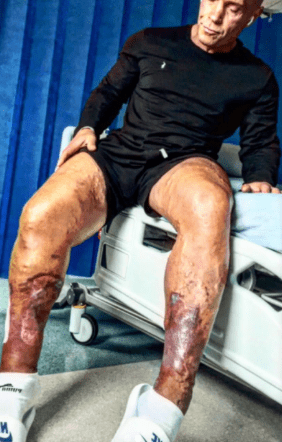
Photo: provided by Paul Hannaford
“Ask any addict in the world, their biggest fear is withdrawing from heroin. It is the most awful feeling in the world,” says Paul Hannaford, “and as soon as you wake up, you have a matter of two hours, three hours maximum, to go and get money to get the drug, otherwise you are in dire straits.”
Waking up in agony, with nappies taped around his legs to stop the bleeding from his maggot-infested legs, starving, and hours away from being hit with withdrawal symptoms, Paul made a choice. He could either stay there, continuing the cycle of waking up as the drugs wear off, forced to commit crimes to finance his next hit, or he could make a decision. He would give himself in.
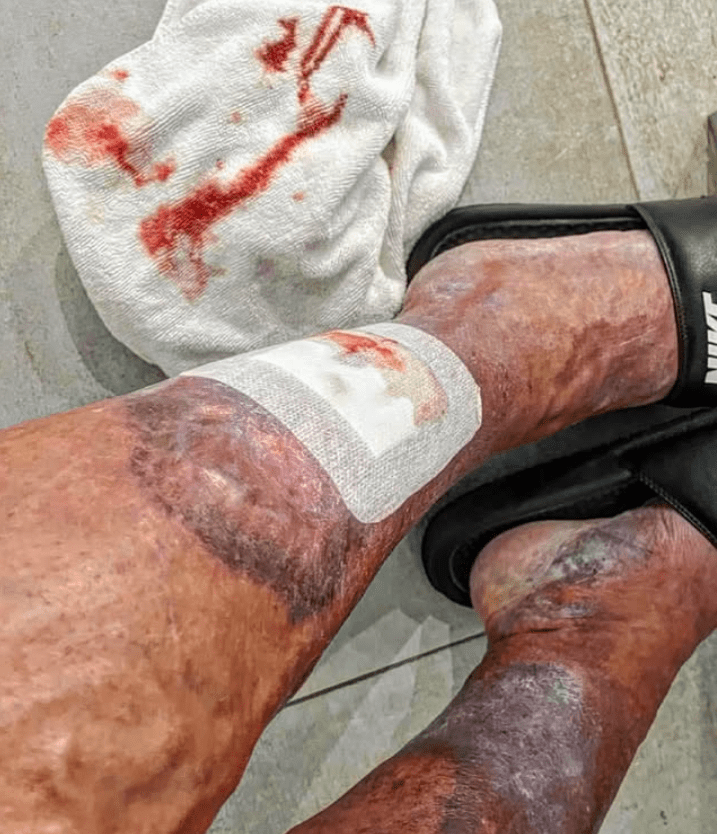
Photo: provided by Paul Hannaford
Due to the extent of the infections in his legs, when he gave himself up to the police, Paul was transported to a hospital, handcuffed to the bed, and eventually diagnosed with blood poisoning. The doctors said that, if he hadn’t given himself up when he did, he would have died three days later. That is how far down Paul was.
Afterwards, at 35, after 22 years of drug use, Paul admitted himself into a rehabilitation facility in Somerset, where he got the help he desperately needed. He began attending narcotics anonymous meetings, meeting people from all walks of life who helped each other get clean, and as of December 2025, he is 19 years sober.
Today, his leg wounds are the best they have ever been but, after years of recovery, he still has to take blood thinners, wear pressure stockings and bandage them every day. However, he is hopeful that by the end of this year, they will be healed for good.
As Paul put it, he’s just happy to “still have his blood pumping.”
From recovery to school drug education
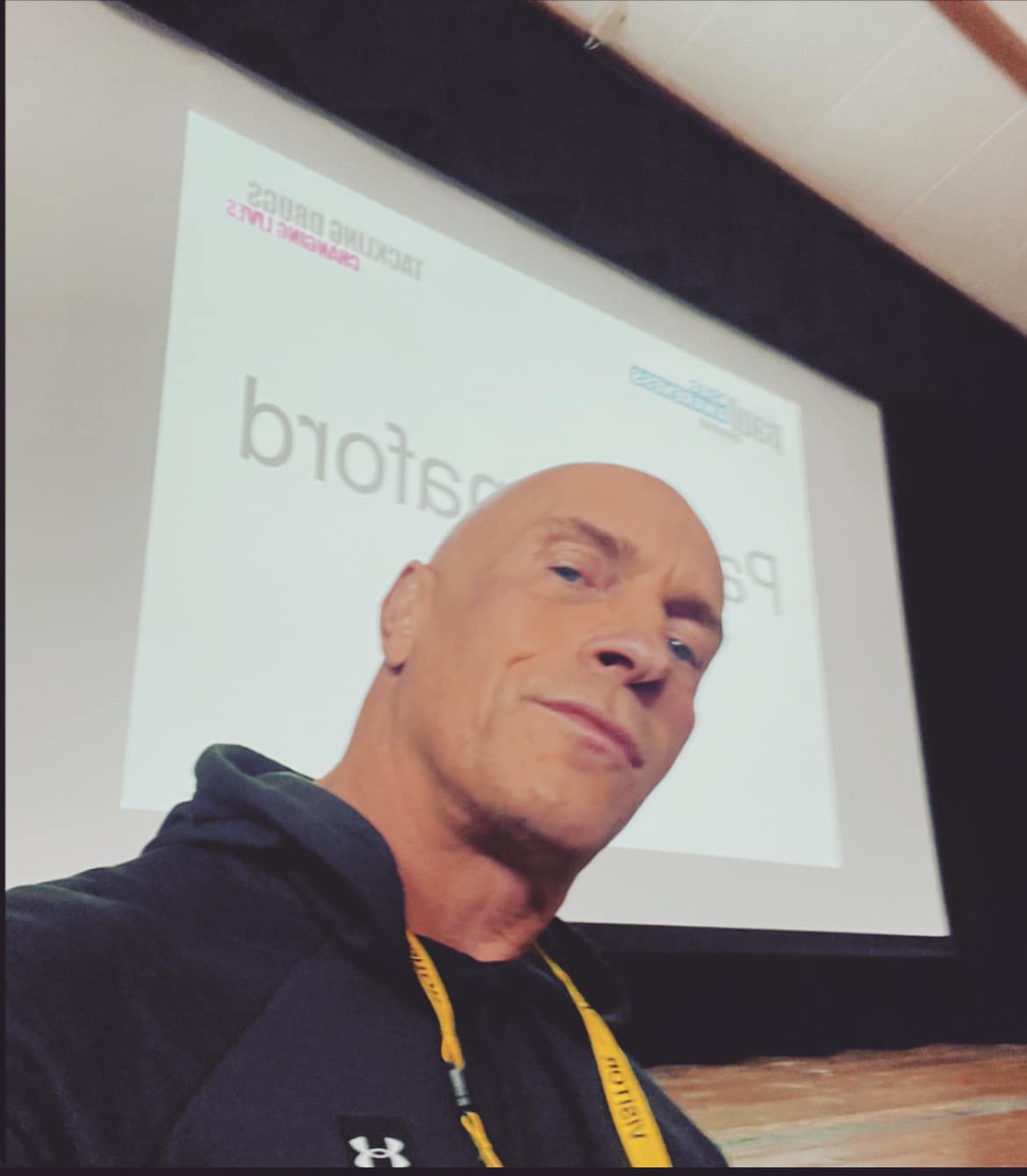
Nowadays, Paul Hannaford is known across the country as a dedicated campaigner for drug and addiction education for children and teenagers, touring secondary schools across the UK to show the effects, dangers, and the consequences of drug use from someone who has felt it to the most extreme degree.
His talks have reached over two million young people, and made an immeasurable impact in the lives of students who, otherwise, might have fallen into the same statistics that Paul was in for most of his young life.
As a testament to his commitment and drive to educate and better the next generation, Paul was awarded the British Empire Medal in the Royal New Years Honours List for his devotion to educating the youth about the dangers of addiction, gangs and the knife crime epidemic.
To end this story with my words, talking about something I have not experienced, paraphrasing his hardship, seems unfitting. So, I will let Paul have the final words.
“To put 100 men or women into rehab for six to 12 weeks, it costs 1.5 million pounds. You put me in front of 100 children for one hour, and I will put every single one of them off heroin and crack. For good.”