
Photo: Deborah Michaelis
Raising a child with additional needs isn’t the easiest journey for a parent, but it can be the most rewarding.
Two mothers of children with disabilities spoke to Uproute about their experiences raising their kids and challenging negative stereotypes people may have about their lives.
Deborah Michaelis, 67, from Derbyshire, is the mother to Zachary Frith, 34, who has Fragile X syndrome.
This is a genetic condition which impacts learning, communication and social skills. Zach communicates with few words, but expresses his needs well through gestures and signing.
“He has brought so much joy into our lives, he is funny and kind and has a simple approach to life. He will not be rushed, he takes his time which means those with him slow down too,” she says.
Deborah reflects on the time Zach was younger and says, “Life with Zach as a child was hard, he was reluctant to go to new places and had sensory issues. Every outing was a challenge for us.
“The judgement and disapproval in public places from strangers when your child is distressed and upset is hard to deal with. There is a general attitude in society that having a child who is not ‘normal’ is sad and people feel sorry for you.”
Zach attended a mainstream infant school from the ages of five to seven, then a primary enhanced resource school until he was 11 and onto secondary school briefly. This is a mainstream school that features a specialist unit for SEND children.
He attended a special school until he was 19, which provides tailored education for young people whose needs can’t be met in mainstream school.
“He was happiest and achieved the most in the specialist setting and I wish I had considered this earlier,” she says. “As a parent going through the emotional trauma of having a child with disabilties it is hard to make decisions.”
When Zach turned 27, he was moved into a supported living house, this allows individuals with disabilities to live in their own homes whilst receiving personalised care and support.
“It was heartbreaking to help him leave and get used to living in a new house with new friends and new support. But he has now lived there for 7 years and has a lovely life.
“This is such a relief because as a parent the worry of what will happen to your adult child when you’re no longer here is all consuming!” she says.

Photo: Deborah Michaelis
In Deborah’s career, she had actually worked with SEND children in the past, however this did not give her the advantage you may assume in her parenting.
“My experience of having a child with learning disabilities was made more complex because I worked with children with SEND,” she says.
“There was an expectation that I was the expert and of course my experience helped, but it is very different with your own child.
“Because Zach’s needs were so obvious, he did get support, but not every school he went to had the understanding or ability to support him in the appropriate way. I even had to fight for him to be excluded from French lessons and to have extra speech and language instead!”
Despite the battles she so often faces, Zach’s infectious personality is what helps her push through the difficult days.

Photo: Deborah Michaelis
“The joy Zach has when he does the things he love makes everyone around him happy. He has his own style and wears a bowler hat or sparkly hat with no worries about what people think,” she says.
Deborah gives honest advice for people who may be experiencing the same thing she did, but reminds us that having a child with disabilities is the start to a different life, but a great one.
She says, “My advice to new parents is give yourself a chance to grieve the child you thought you wanted, and then love the child you have. Refuse to let them be a ‘tragedy’ because there is always joy to be found.
“Don’t let the judgement of others impact your life or the love for your child.”
Deborah’s story doesn’t hide away from the realities that come with having children with disabilities, she openly shares her struggles while refusing to let them overshadow the joy Zach brings to her life.
Like Deborah, many families experience similar situations in life, and learn how to transform their worries into love and appreciation for the happiness their children embody.
Lee Guard, 63, from Derbyshire, is the mother of Jenny, 30.
Jenny was diagnosed with Autistic Spectrum Disorder at about two and a half years old, which is a lifelong neurological and development disability that affects how a person communicates and behaves.
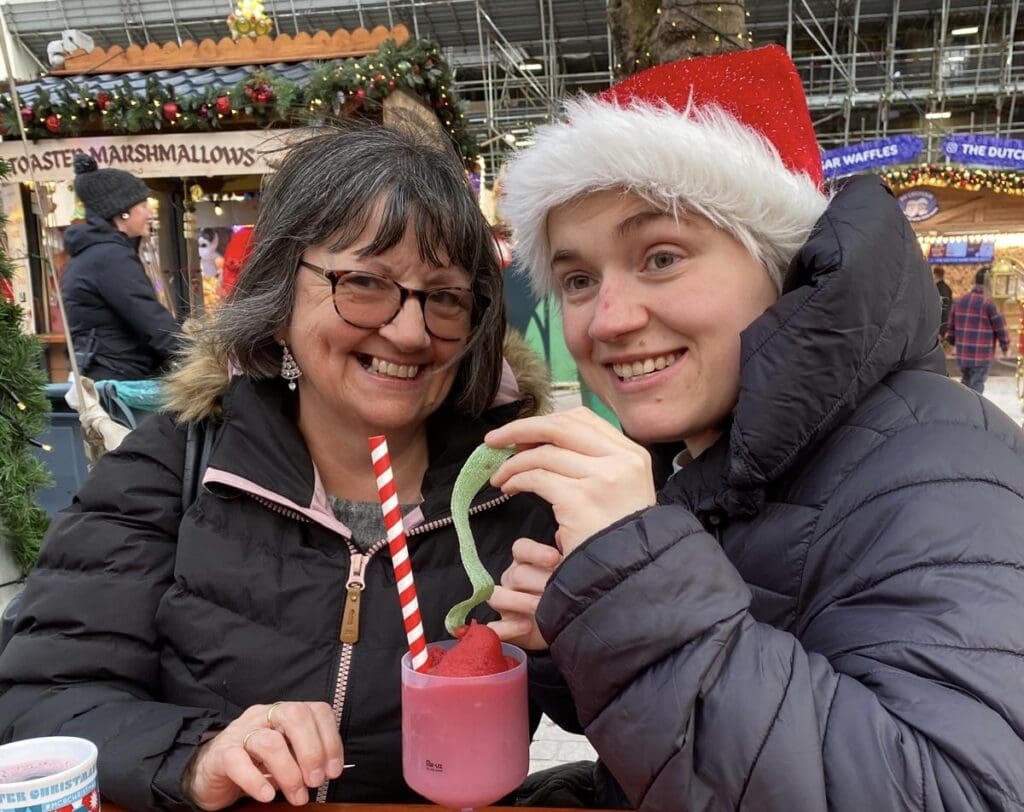
Photo: Lee Guard
She says, “In 2020, Jenny moved out of our home and into independent supported living. Prior to that I had been her full time carer which involved early starts, long days, constant supervision with everything both day and night.”
Lee shares the things most people don’t have to think twice about, and explains what she has to do to ensure Jenny is safe and supported.
“I need to link her arm to cross the road to my car as she has no idea about safety near roads/cars. I have to put the child lock on my door as she likes to throw it open as soon as we stop and jump out.
“She will need reminding to use the toilet, need food and drinks prepared but can happily amuse herself watching TV or DVDs or listening to music,” she says.
Despite this, Jenny’s ‘bubbly’ personality is the driving force behind the family, showing them how to find joy in small moments in life.
“She has lots of energy and a wicked sense of humour. She is caring, strong willed, stubborn and knows her own mind.
“She can be infuriating but it’s hard not to love her, especially when she’s laughing at some Disney Youtube cartoon or reciting a particular phrase from a clip,” she says.
Lee highlights some of the burdens she faced when Jenny became an adult, and spoke about the reduced financial support from social care and other services.
“She [Jenny] still needed the same high level of support and supervision but for some reason, there is far less money available and parents are expected to just carry on, often at breaking point,” she says.
“Although she is an adult in age, we are still supporting a child in terms of their understanding, behaviour and daily support. You have to fight even harder to get services because there are fewer options available.”
According to Scope, the average disabled household faces an extra £1,095 each month, which is just to have the same standard of living as non-disabled households.
The Government provides funding support called PIP (Personal Independence Payment) to disabled households, however, the average PIP payment is £465 a month, which is not enough to cover the average £1,095.
Therefore leaving a £630 shortfall. These facts from Scope, give insight into the realities families like Lee and Deborah have to go through.
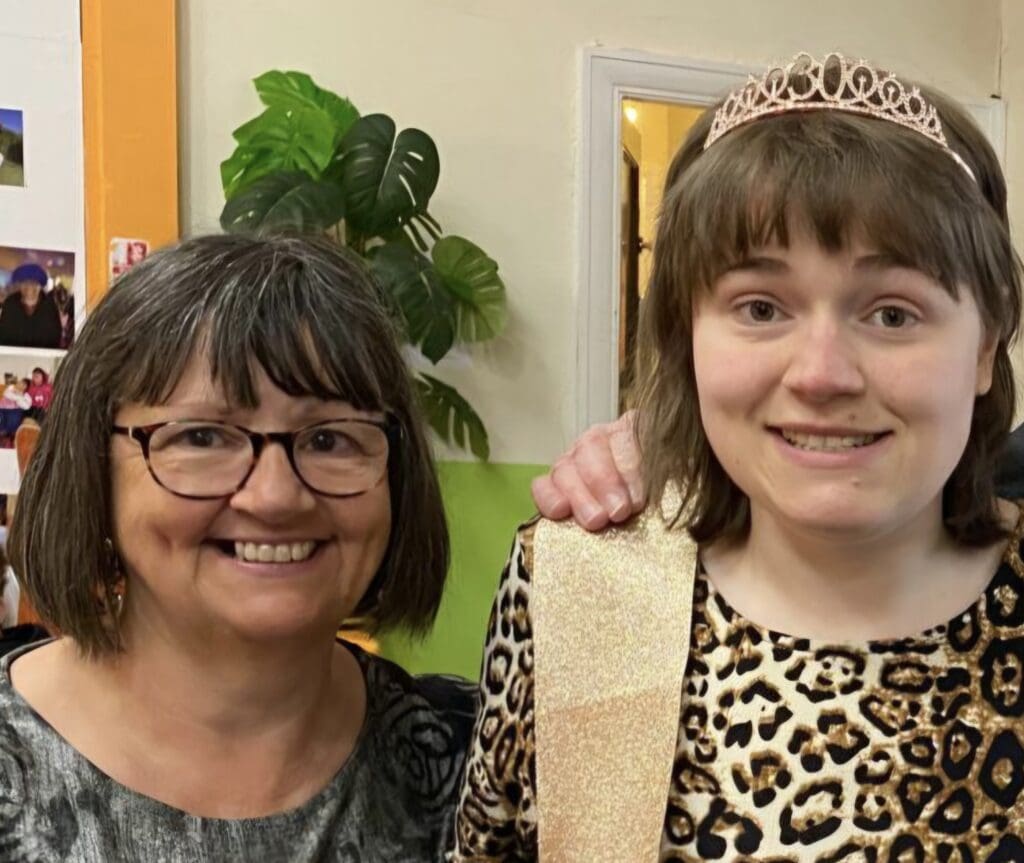
Photo: Lee Guard
Despite this hardship, these challenges have transformed Lee into the person she is today.
“I have become a stronger person as I’ve had to continually fight for her to get support to enable her to live her life to the fullest and be supported to do that,” she says.
“As her mum, I have always felt it is my responsibility to fight her corner. I am her voice and I’m not afraid to shout to be heard.”
If she was to give advice to new parents with SEND children, she says, “Life is going to be really hard, but there will be good days, try and enjoy them and remember them when you’re having a bad day. Over time, it will get better.”
When reflecting back, she remembers a moment that perfectly sums up why having children with disabilities isn’t a loss, its redirection.
She says, “A friend once asked me whether I wanted there to be a ‘cure’ for autism and she was surprised when I replied no.
“What I meant was, that if you took away autism from Jenny, she would no longer be the Jenny that we know and love.”
If you want to read more stories around disability, click the links below: