

(Photo: Dan Burton via Unsplash)
Official figures show a 57% rise in households at risk of homelessness after leaving Home Office asylum accommodation, raising questions over whether the current 42-day move-on period gives refugees enough time to secure housing, benefits and work.
Latest quarterly homelessness data shows that 2,200 households were owed a prevention duty between October and December 2025 because they were required to leave accommodation provided by the Home Office as asylum support. This was a 57.1% increase compared with the same quarter of the previous year.
A prevention duty means a council has assessed a household as being threatened with homelessness within 56 days and has accepted a legal duty to take reasonable steps to prevent them becoming homeless.
A further 3,670 households were owed a relief duty for the same reason, meaning they were already homeless when they approached a local authority. This figure was broadly flat year-on-year, rising by 0.5%.
The figures suggest that households leaving asylum-support accommodation are increasingly appearing at the prevention stage of the homelessness system, before they become homeless.
Previous historic data shows the issue has become a sustained pressure for local authorities. The total number of households owed prevention or relief duties after being required to leave Home Office asylum-support accommodation rose from 5,980 in 2022–23 to 18,320 in 2023–24, before remaining high at 18,550 in 2024–25.
Move-on period extended to 42 days
The Home Office told Uproute it was working to reduce the risk of homelessness among people leaving asylum accommodation and had extended the move-on period from 28 to 42 days.
A Home Office spokesperson said: “Asylum costs are down 15%, saving over half a billion in hotel spending last year, as we continue to deliver better outcomes for taxpayers and restore control to our borders.”
“For individuals granted leave to remain, we are committed to successfully transitioning them from asylum accommodation to mitigate the risk of homelessness, which is why we have extended the grace period in which they must move on to 42 days, from 28 days.”
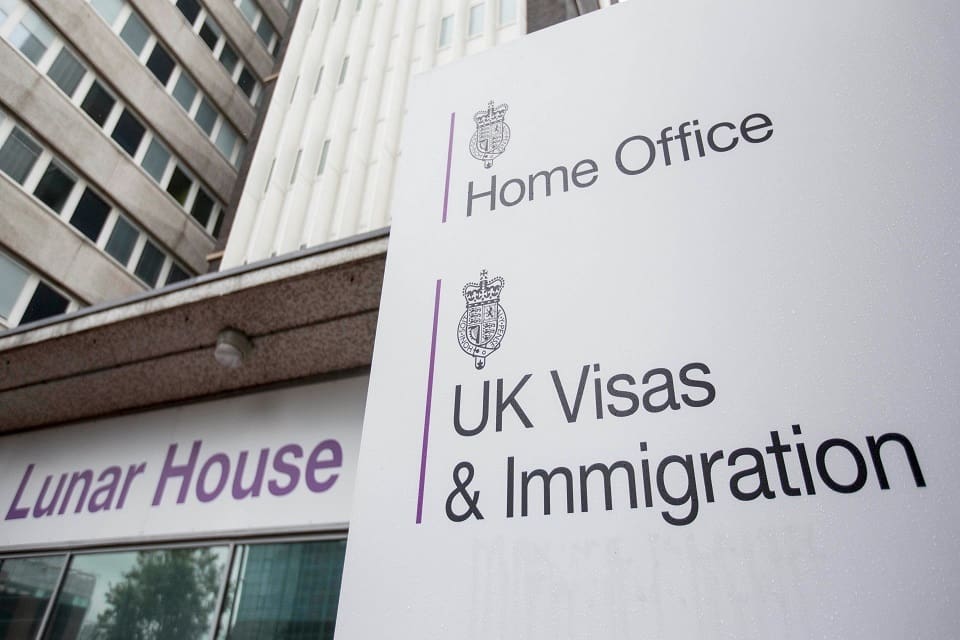
Lunar House, central headquarters for UK Visas and Immigration (Photo: GOV.UK)
The department said it had placed Asylum Move On Liaison Officers in more than 50 local authorities, working alongside Migrant Help to support people leaving asylum accommodation.
The Home Office also said it recognised the pressure placed on local authorities as the number of people awaiting an initial asylum decision is reduced, and that it works with councils to mitigate wider impacts, including homelessness risk.
Charities call for longer support window
Homeless Link said it welcomed the increase from 28 to 42 days, but said the move-on period should be at least 56 days to align with the Homelessness Reduction Act and the Universal Credit process.
Alex Worrell, Policy Manager at Homeless Link, said: “While we welcome an increase on the previous move-on period of 28 days, a 42-day move-on period is still not enough time to allow people to access housing, benefits and other support.
“Because of this, we expect the current move-on arrangements to continue driving people into homelessness.”

A protestor holding up the banner “JOBS & HOME NOT RACISM” In Rotherham. (Photo: Tse Chun Ming / Uproute)
Homeless Link said the government had previously committed to publishing an independent evaluation of a pilot 56-day move-on period, and called for that evaluation to be published.
The British Red Cross also said it had long called for the move-on period to be extended to align with the time councils have to help people apply for jobs, housing and benefits.
The charity said: “Newly recognised refugees face an almost inescapable period of destitution and indignity as the first step of their new life. We support people who are facing life on the streets once they get their refugee status, because they’re not given enough time to find work and housing.”
It said this made it difficult for people to integrate and rebuild their lives in the UK.
Pressure on councils
The Local Government Association (LGA) said councils would play a “crucial part” in any changed asylum system and called for engagement with local governments before reforms are implemented.
In a statement, the LGA said it wanted to work with the government on “developing and funding a better system for accommodating and supporting asylum seekers”.
It added that the Home Office should engage with and obtain the consent of councils “well in advance” of decisions to open or close asylum accommodation, and that the asylum system should minimise homelessness and destitution.
Hillingdon recorded one of the highest numbers of households owed homelessness support after being required to leave Home Office asylum-support accommodation in the latest full-year local authority data.
Hillingdon Council told Uproute it faced additional pressures because of its status as a port authority, with Heathrow Airport located in the borough.
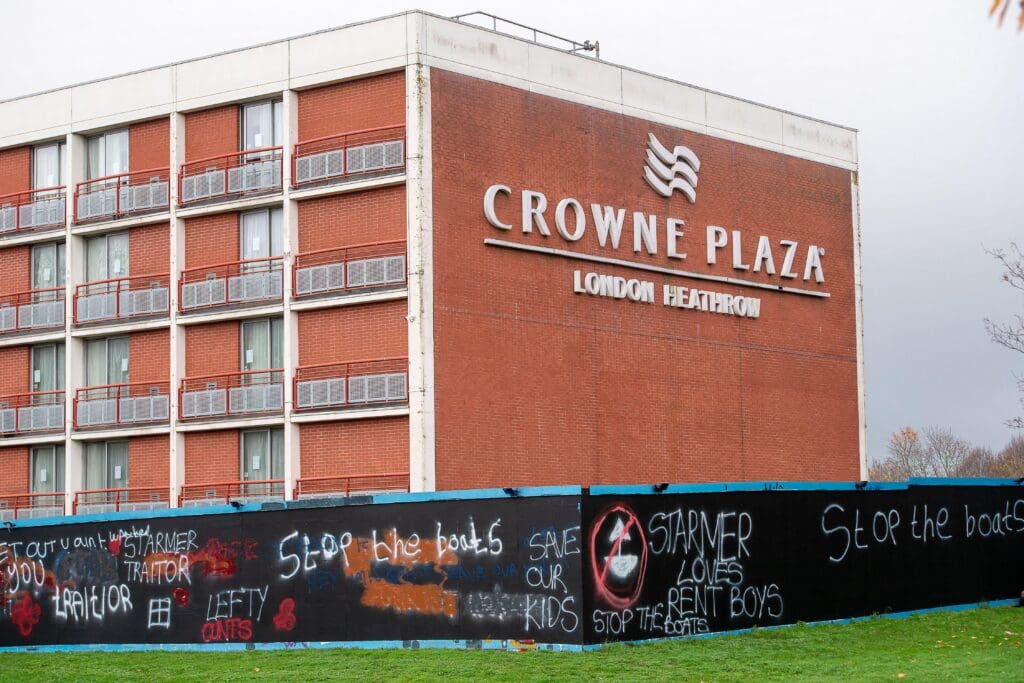
The Crowne Plaza London Heathrow, located in West Drayton, is actively being used by the UK Home Office as temporary accommodation for asylum seekers. (Photo: Maureen McLean/Alamy Live News)
A council spokesperson said: “The council faces added pressures due to its port authority status, with Heathrow Airport located in the borough, including rising demand to support eligible former asylum-seeking families and Chagossian nationals.
“Hillingdon has the highest number of asylum seekers housed by the Home Office in hotels or dispersed accommodation of any London borough. The council continues to see a significant number of former asylum seekers evicted from this accommodation who then present as homeless and in need of support.
“Insufficient government funding for the council’s asylum responsibilities places an unfair burden on Hillingdon residents, who are subsidising the additional costs. The council has repeatedly called for this shortfall to be addressed, as no local authority should be expected to take on added pressures without proper funding and regard for local circumstances.”
The council has previously warned that asylum accommodation pressures were putting strain on local services. In May 2025, BBC London reported that the council was calling for more government funding to support asylum seekers, saying it was struggling to accommodate more than double the national threshold.
The pressure comes as councils are already managing rising demand for homelessness support and temporary accommodation.
On 31 December 2025, 134,210 households were in temporary accommodation in England, up 5.0% from the previous year. This included 85,800 households with children and 176,130 dependent children.
Wider asylum reforms to be implemented
The rise in prevention-duty cases comes as the government is making wider changes to the asylum system.
The King’s Speech announced an Immigration and Asylum Bill, which the government says will implement reforms from its Restoring Order and Control statement. The proposed changes include a new “core protection” model, more temporary refugee status, faster removals, changes to asylum support and a more conditional system of protection.

An Immigration and Asylum Bill was announced in the King’s Speech, 13 May 2026. (Photo: UK Parliament)
Separately, the government has revoked Regulation 5 of the Asylum Seekers (Reception Conditions) Regulations 2005, changing the legal basis of asylum support from a statutory duty to a more discretionary power starting in June.
Homeless Link said it expected the shift from a statutory duty to a discretionary power to increase risks for some people.
“We would expect the shift from a statutory duty to a discretionary power for asylum support to push more asylum seekers towards illegal work and possible exploitation, and drive up levels of destitution and homelessness,” Worrell said.
She said voluntary organisations would try to support people left without a statutory safety net, but this could put pressure on charities’ capacity.
Dr Jonathan Collinson, an immigration law academic at the University of Sheffield, said making refugee status more temporary and conditional could affect refugees’ ability to access work and stability.
“Temporary and conditional leave makes refugees less likely to be able to access employment, more reliant on benefits, and more likely to become homeless,” he said.
Dr Collinson said government policy often treats asylum applicants as potentially removable, despite many later being recognised as refugees. He said limited access to work, English language classes and long waits for decisions can contribute to worklessness and homelessness among refugees.
“There is no single policy solution to the problem of refugees becoming homeless when they exit asylum accommodation,” he said.
“Government needs to invest in integration, giving refugees the best chance of moving on successfully from asylum accommodation, into work where possible.”