Photo: EduKate via Facebook
After online backlash left her feeling isolated, Scottish content creator Kate Barr is walking from Dumfries to Hong Kong to raise £1 million for charities supporting mental health, young people and people with disabilities.
By the time Kate reaches her accommodation, it can be close to 10 pm.
She has spent the day walking under the summer heat, carrying a backpack through unfamiliar towns and roads, stopping to film parts of the journey as she goes. Some days are 15 miles. Others are closer to 25. Most average at around 20.
Then, before resting, there is still video-editing to do.
“I don’t get to my accommodation until 9 or 10 at night,” she says. “And then I spend about two hours editing and doing all my social media stuff for the walk.”
Kate, known online as EduKate, is walking from Dumfries, Scotland, to Hong Kong to raise £1 million for three charities supporting mental health, social isolation, disability and young people finding their place.
At the time of the interview, she had reached Munich. Her route had already taken her from Dumfries to just past Newcastle, by ferry to the Netherlands, and then through Europe towards Germany. From there, she plans to walk down to Istanbul, across Turkey towards Batman, near the Iran border, before eventually continuing through Pakistan, India, Bangladesh, Southeast Asia, China and Hong Kong.
The walk, she estimates, could take 18 months of actual walking. With possible breaks to work and save money, it may take up to two years.
But for Kate, her journey is not only about distance.
It is also a return to a city where she once worked as a teacher, built an online audience, and later found herself at the centre of a wave of criticism that left her feeling isolated and misunderstood.
Now, she is walking back towards Hong Kong, a city that is not quite home, but not simply a destination either.
“I think home is Scotland,” she says, “but I see Hong Kong as a place I love and as a place that’s done a lot for me.
“I feel like I’ve unfinished business with Hong Kong.”
Kate grew up in rural Scotland, where walking was part of everyday life.
“I come from rural Scotland, so I mean, if you’re not walking, you’re drinking,” she says. “You kind of have to get into walking.”
From a young age, she says, walking offered a sense of freedom. It was free, simple and available almost anywhere. It could be done with a dog, with another person, or alone.
“From a young age, I’ve always really appreciated the freedom that comes with walking,” she says. “It’s free. You can basically do it wherever you are. It’s a chance to connect with your dog or with yourself.”
A city that offered a way out
Before this journey began, Kate had already imagined a long-distance walk. When she was living in Hong Kong, she had thought about walking back to Scotland slowly, returning home on foot rather than by plane.
At the time, she was teaching in Hong Kong. Her contract came to a natural end in November, but she was not in the financial position to begin the walk then. She returned to Scotland, worked for a few months, and waited to see whether the idea would fade.
It did not.
“So now instead I’m walking from Scotland to Hong Kong,” she says. “I’m doing what I always said I would do but the other way around.”
Hong Kong first came into Kate’s life through work and possibility.
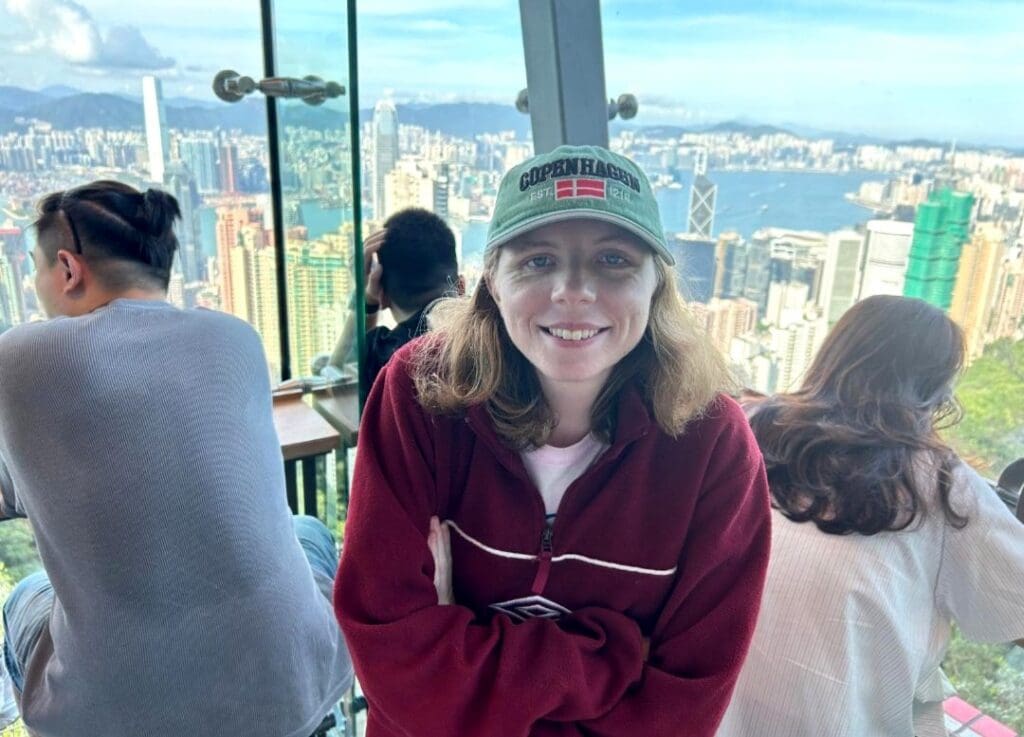
Kate in Hong Kong. (Photo: EduKate via Facebook)
After graduating, she said she had struggled to find graduate jobs in the UK. Teaching in Hong Kong offered a route out of that uncertainty, as well as a chance to explore Asia from a city she had long found exciting.
“There were loads of things that made me excited about the idea of moving to Hong Kong,” she says.
She describes Hong Kong as a place with its own energy, but also as a base from which mainland China, Japan and Southeast Asia felt reachable. For someone from Europe, it made Asia feel open.
The move was not only about travel. It was also about opportunity.
“The UK economy is quite stagnant,” she says. “I wasn’t finding any graduate jobs. I didn’t really have much to lose because it’s not like I would have been leaving a prestigious job behind.”
Hong Kong gave her work, confidence and a new life. But her experience of the city, she says, was shaped mainly by the international community around her.
“I think Hong Kong is quite like London or New York or Singapore in that there’s such an international community, it makes it very easy to make friends within that community,” she says.
Connecting more deeply with local Hongkongers was harder.
“My experience of Hong Kong was very much the expat international experience,” she says. “It comes with benefits. It’s a very easy thing to plug into and it’s very familiar but it obviously does take you one step away from the culture that you moved there to seek.”
Still, her memories of daily life in the city remain mostly positive.
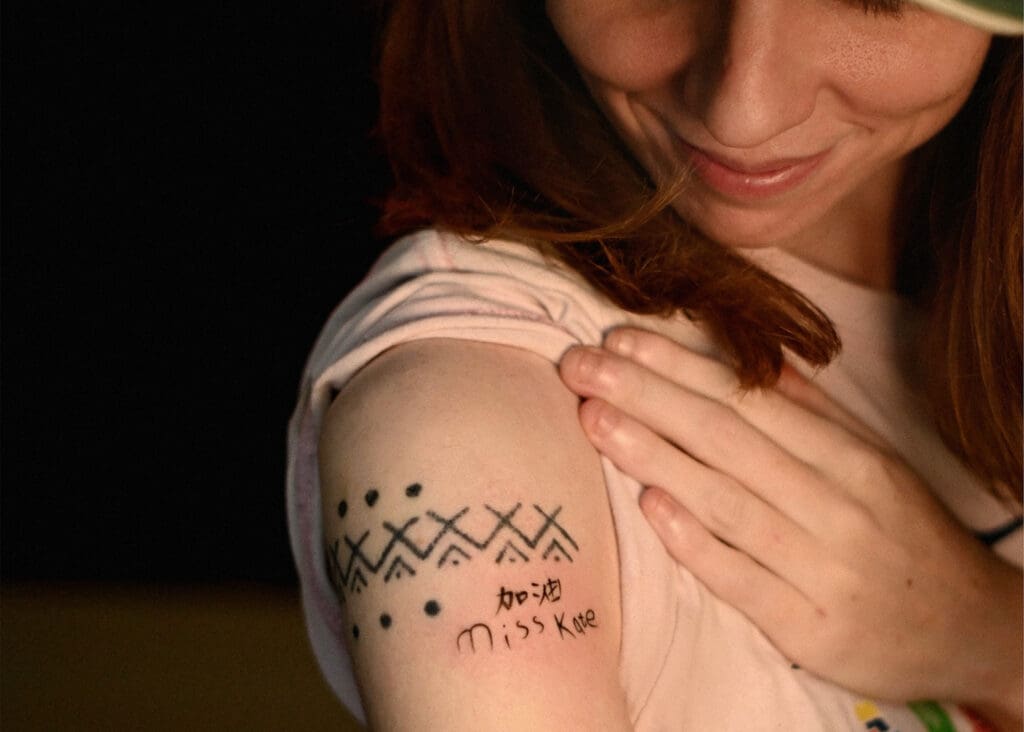
Kate’s tattoo reads “加油 Miss Kate”.
“加油” is a Hong Kong phrase meaning “keep going” or “support”. (Photo: EduKate via Facebook)
As a teacher of young children, she says each day brought small, funny and meaningful moments. One memory comes from the Korean song “APT”, which her pupils sang constantly for months.
“Maybe for three months of my life, that was the only thing I would hear in the classrooms,” she says. “Little toddlers singing that for three months.”
At the time, it drove her mad. Now, she still listens to the song because it brings back memories of her pupils.
“I really have almost no negative memories of Hong Kong really,” she says.
Then she pauses on the difference between life online and life outside it.
“Online culture is a different space to real life,” she says. “My real life experience of Hong Kong has been really positive. No one’s ever been unkind to me in person.”
That distinction became important when her social media presence began to grow.
Kate first started on YouTube. Long-form video, she says, remains her favourite form of social media because it allows people to explain themselves properly.
“I think long form is the most meaningful,” she says. “It’s where you actually get to properly spell out your story.”
At university, she had wanted to become a journalist, particularly an interviewer. She liked the idea of talking to people and learning their stories. Her early YouTube channel reflected that. She sent messages and emails asking people if they would speak to her, despite having only a small audience.
“The idea that you could get paid to talk to people is pretty cool, right?” she says.
One video later went viral while she was in Hong Kong. That gave her the confidence to see social media as more than a hobby.
But the same online space that gave her an audience later became the place where she felt attacked.
When the comments turned
Kate says the backlash began after she posted a long YouTube video discussing the pros and cons of Hong Kong, including what she described as suppressed speech. In the weeks that followed, she noticed a shift in the way people reacted to her videos.
Clips that had once been treated as casual observations of daily life in Hong Kong were suddenly read more negatively.
“I was getting a lot more comments about how I needed to go home and how I was being incredibly disrespectful,” she says.
One video, in which she tried to pay for a small purchase with a HK$500 note, became a particular source of criticism. Kate says she had not intended to be disrespectful.
“There’s no reason for that other than that was the money I had,” she says. “I wasn’t trying to be cheeky or disrespectful or anything.”
Some online users accused her of being culturally insensitive. Kate believes the response was disproportionate and, in her view, partly amplified by coordinated online behaviour, though that claim has not been independently verified.
“The level of rage for what I actually did just didn’t add up,” she says.
During the backlash, the school where she worked was contacted. Kate says rumours later spread that she had been fired or removed from Hong Kong, but she says this was not true. According to her, the school told her there were no grounds for disciplinary action.
“They explained to me, you haven’t done anything that would warrant us taking disciplinary measures,” she says.
The experience still shook her.
“From my perspective at the time I thought, God, suddenly everyone hates me,” she says.
For Kate, the most painful comments were those suggesting she believed she was above Hong Kong culture because she was white or British.
“That really hurt me because I didn’t come to Hong Kong thinking I was better than anyone,” she says. “I came because I wanted to learn.”
She says she never intended to be destructive or disrespectful for the sake of content.
“This idea that I was going out of my way to be destructive for the sake of content or anything, that was tough.”
The weight of being watched
The backlash affected her mental health. She was far from her family, scared about her future, and worried that the online criticism would follow her permanently.
“I felt like I’d ruined my life,” she says.
She compares the experience to being publicly humiliated in a playground.
“The first time that happens to you on a mass level, it is sort of just like everyone in a playground calling you a loser or something,” she says. “It makes you feel hated.”
For about a month, that feeling stayed with her. Then, she says, she had to accept that the comments existed online and she could not control them.
The most intense period lasted around three weeks. Her employer stood by her. Her family supported her. Other people online also began to send messages of encouragement.
“The majority were incredibly supportive and the majority of my audience is from Hong Kong,” she says.
But something in her relationship with the city had changed.
“There’s something that you can’t get back,” she says.
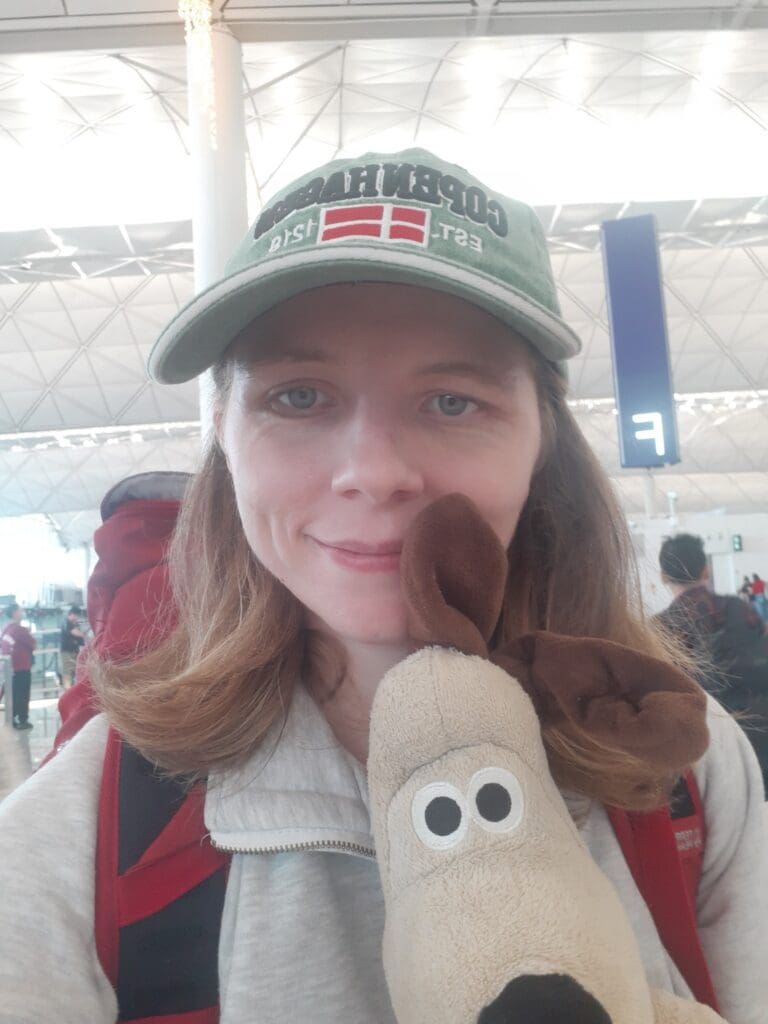
Kate at the Hong Kong International Airport before leaving the city. (Photo: EduKate via Facebook)
Before the backlash, she had often described Hong Kong people as kind. Some viewers had told her Hongkongers were not known for being kind, but she had not understood what they meant. After the backlash, she says, she saw another side of the online culture.
Yet she is careful not to turn that experience into a judgement on Hong Kong as a whole.
“If you became a content creator in Britain, there’s plenty of people in Britain that have a problem with immigrants or would like to make fun of a way you do something,” she says.
“It’s not a Hong Kong thing. It’s just every country has some people like this.”
She adds: “Just because someone with a Hong Kong profile is saying something nasty, that doesn’t mean I have to decide it’s like a Hong Kong problem.”
It is this tension that makes her current journey more than a fundraising challenge. She is not walking away from Hong Kong. She is walking back towards it.
“I’m walking to Hong Kong because it’s such a lovely place in the world,” she says. “So I hope it’s a chance that Hong Kong can be celebrated.”
Walking for people left outside
The charities she is walking for are rooted in experiences closer to home.
Two of them, The Usual Place and Dumfries Befriending Project, are based in Dumfries and Galloway, where Kate is from. The third, Scottish Action for Mental Health (SAMH), is a Scottish mental health charity.
The Usual Place trains people with learning disabilities and additional support needs, helping them develop skills for the workplace. For Kate, its work is personal. Her sister, who is autistic, was employed there.
“The Usual Place was probably the best experience my sister has had in her adult life,” Kate says.
She says people with disabilities often have skills they want to contribute, but are not always given the chance.
“That leaves people with disabilities in really horrible positions where they’ve no money and they’re totally socially isolated and they have skill sets they want to bring to society, but society’s not giving them that chance.”
The Dumfries Befriending Project pairs young people going through difficult times with volunteers who can spend one-to-one time with them. Kate says it is the kind of support she may have benefited from when she was younger.
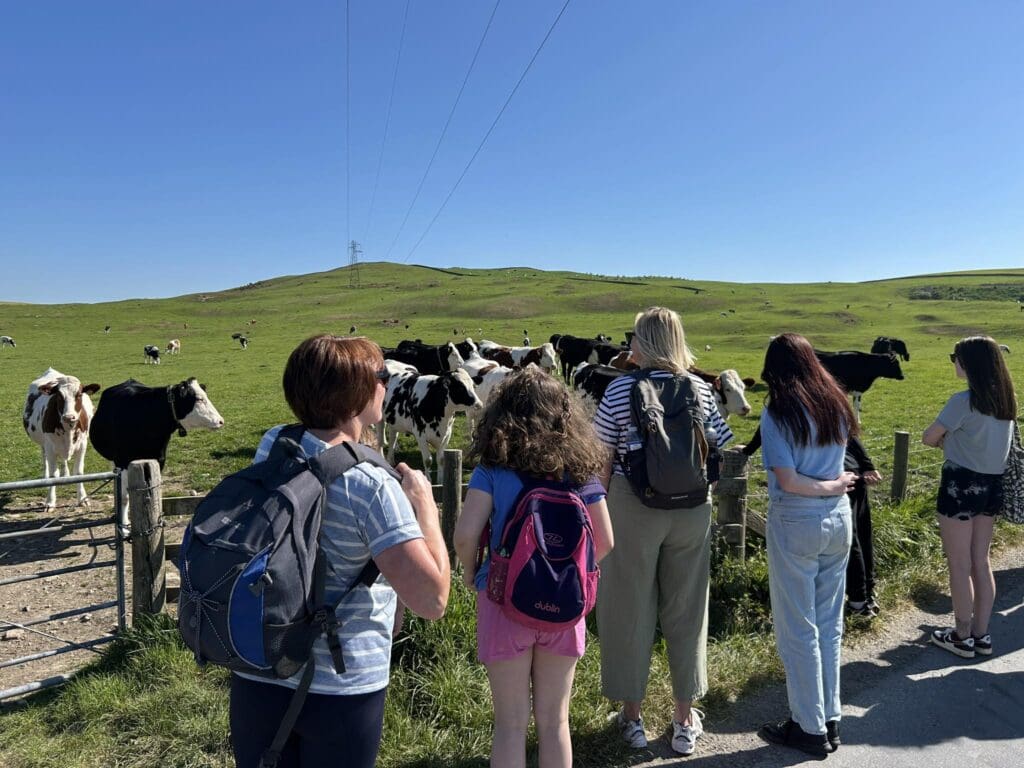
The Befriending project organsies events such as farm visits, BBQ and different outings for participants. (Photo: Dumfries & Galloway Befriending Project via Facebook)
“I probably could have done with a befriender growing up,” she says.
Her connection to SAMH comes through her own experience of mental health struggles and those within her family.
Kate says her grandmother has experienced psychosis and has spent much of Kate’s life in and out of institutions. She now lives permanently in a care home. Growing up with that, and with an autistic sister, shaped Kate’s understanding of how complex mental health and neurodivergence can be.
“I’ve understood brains can be very complex and they can really make people struggle,” she says.
She also has Asperger’s herself, which she says means anxiety has been a recurring part of her life.
“I’m always going to be a little bit anxious because I’m aware that I’m different from people,” she says. “That’s quite stressful to live with.”
This is part of why the charities matter to her. The walk is not only about raising money, but also about reducing stigma around people who struggle.
“I have no judgment on anyone who struggles mentally,” she says. “Who would I be to judge?”
She says people dealing with mental illness or disability should not be discounted.
“These people have so much to offer society,” she says, “and we’re kind of missing out when we don’t help these people shine.”
The fundraising target is large: £1 million. Kate knows that it is ambitious. She is not a famous athlete or a major celebrity. But the walk itself is ambitious, she says, so the fundraising target may as well be too.
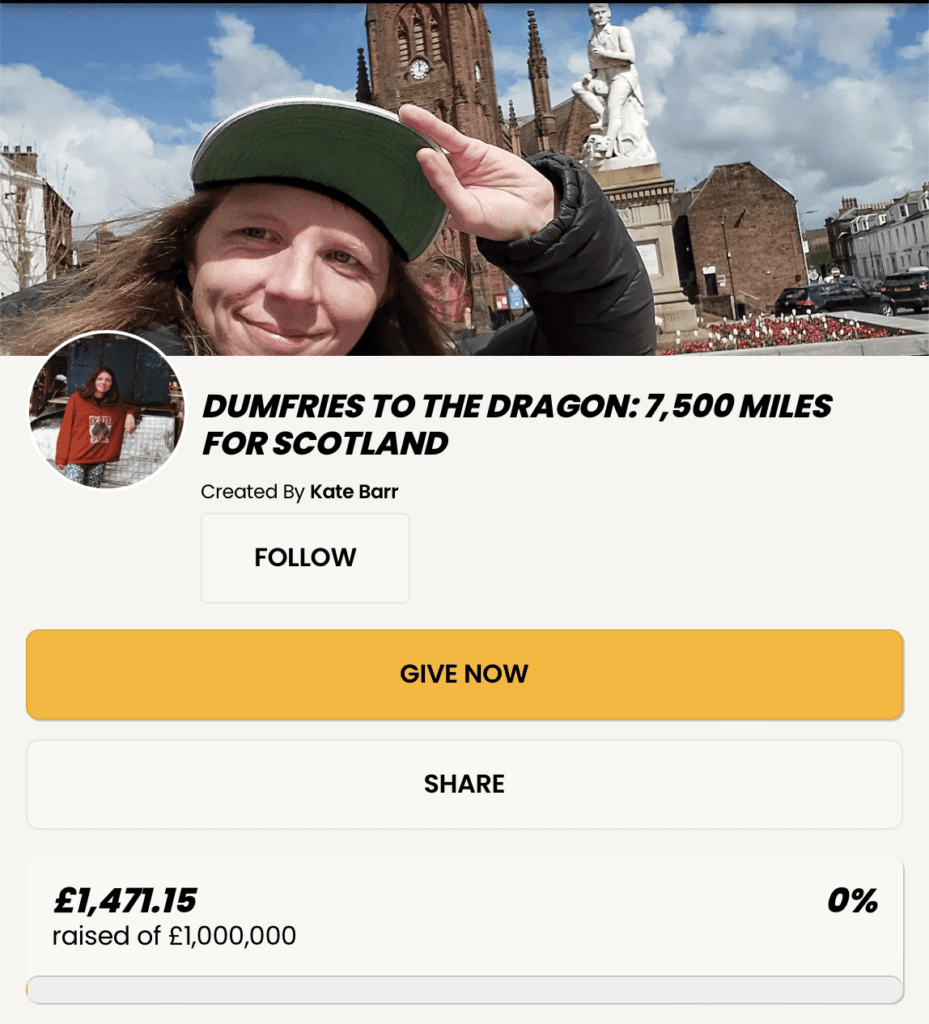
Kate’s fundraising page on givestar. (Photo: Screenshot on 2 June)
“It’s obviously a huge target,” she says. “But I also think this walk in general is ambitious, so why not go for it?”
Even if she does not reach the target, she says any money raised for charity matters. But reaching it would mean something larger.
“To raise that amount of money would be a tribute to this idea that anyone can do anything,” she says.
That idea also shapes the way she talks about the walk itself.
The journey is not a straight line
Some parts of the journey require planning, money and problem-solving. But much of it, she says, comes down to repetition: waking up, putting on the backpack, and walking again.
“This walk has technical elements to overcome, but 90% of it is just about waking up in the morning,” she says. “You committed to walking 20 miles a day. So you actually do it and then you do the same again and again and again.”
The simplicity of that does not make it easy.
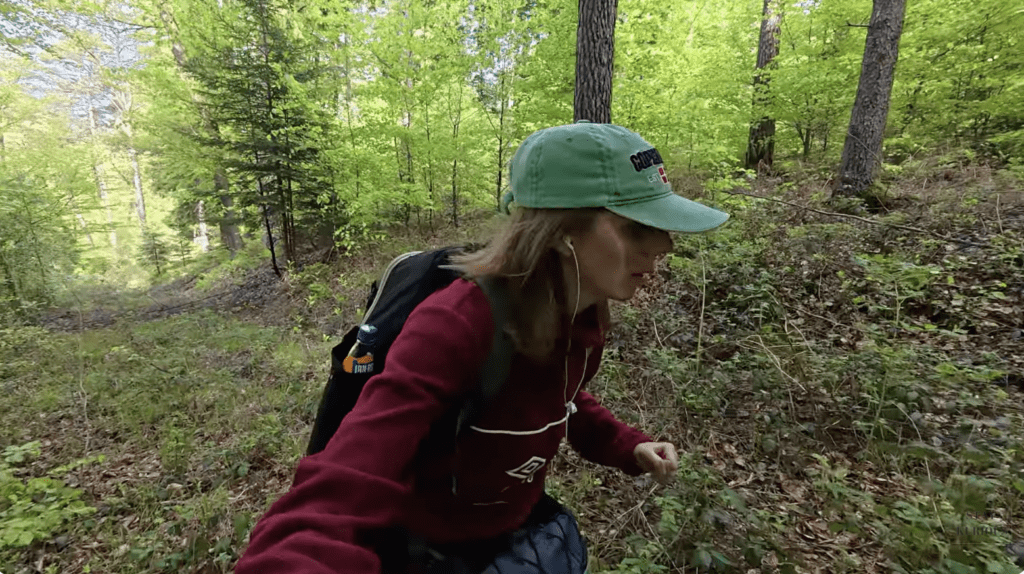
Kate walking from Kerchief to Frankfurt in Germany. (Photo: EduKate via YouTube)
In Germany, Kate accidentally ended up on a motorway after following a trail that led her there. What she thought would be a short section became much longer.
“The traffic just got closer and closer to me,” she says.
Cars were passing at high speed. She knew she should not be there, but once she was on the road, she felt she had to keep going until she could leave it.
“Once you’re on it, you’ve kind of just got to commit,” she says. “It’s not like you can just jump off it or anything.”
The experience taught her not to rely completely on Google Maps. It also made her think about the drivers passing her.
“I was aware this also isn’t nice for drivers,” she says. “They’re flying past me at 80 miles an hour and they’re probably seeing a girl at the side of the road and thinking, is she okay?”
Another difficult day came when roadworks blocked her planned route and she had to take transport. She knew she would need to return and complete that section later. Still, it affected her.
“I felt like such a failure,” she says.
The moment made her realise that the journey would not always be as simple as walking forward.
Each day brings its own problems: heat, fatigue, route changes, money, accommodation, filming, editing and the uncertainty of what comes next.
At the border with Iran, she expects to stop. Walking through Iran, she says, would be too dangerous and expensive. Unless social media begins to support her financially, she plans to return to Scotland for several months to work, possibly as a waitress, save money, then continue from Pakistan.
One more day, one more road
For now, Hong Kong remains far ahead of her.
Before it, there is Turkey, Pakistan, India, Bangladesh, Southeast Asia and China. There may be months of walking, and perhaps months of work in between. There will be more roads, more mistakes, more editing at night, and more days when the task is simply to keep moving.
The end is too far away for her to imagine clearly. When she was planning the walk, she thought about arriving in Hong Kong often. Now, most days, she is focused only on reaching the end of that day.
But she still knows what she hopes the arrival will feel like.
“I hope that Hongkongers are happy to see me,” she says. “I want us to all get on and I hope that it’s a celebration for us all.”
She does not know how long she will be able to stay when she arrives. If her finances allow, she would like to remain in Hong Kong for a few months, seeing the places she missed and eating the food she did not get to try.
“Instead of just walking there and then the next day flying home,” she says. “That would be a bit of a shame, right?”
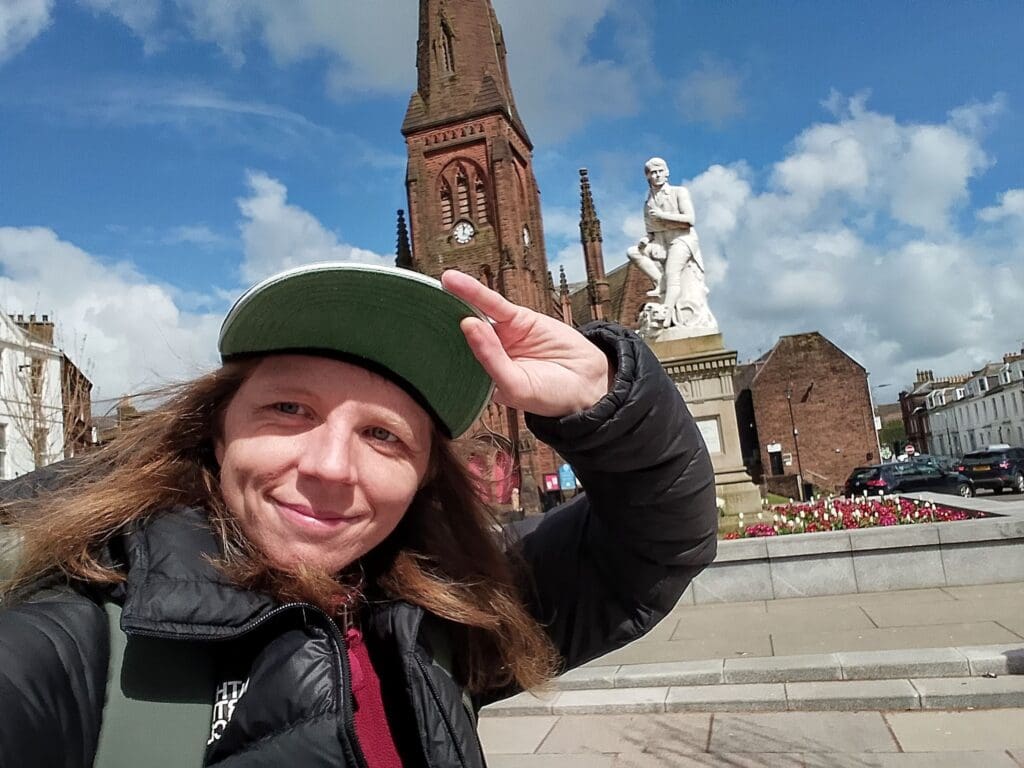
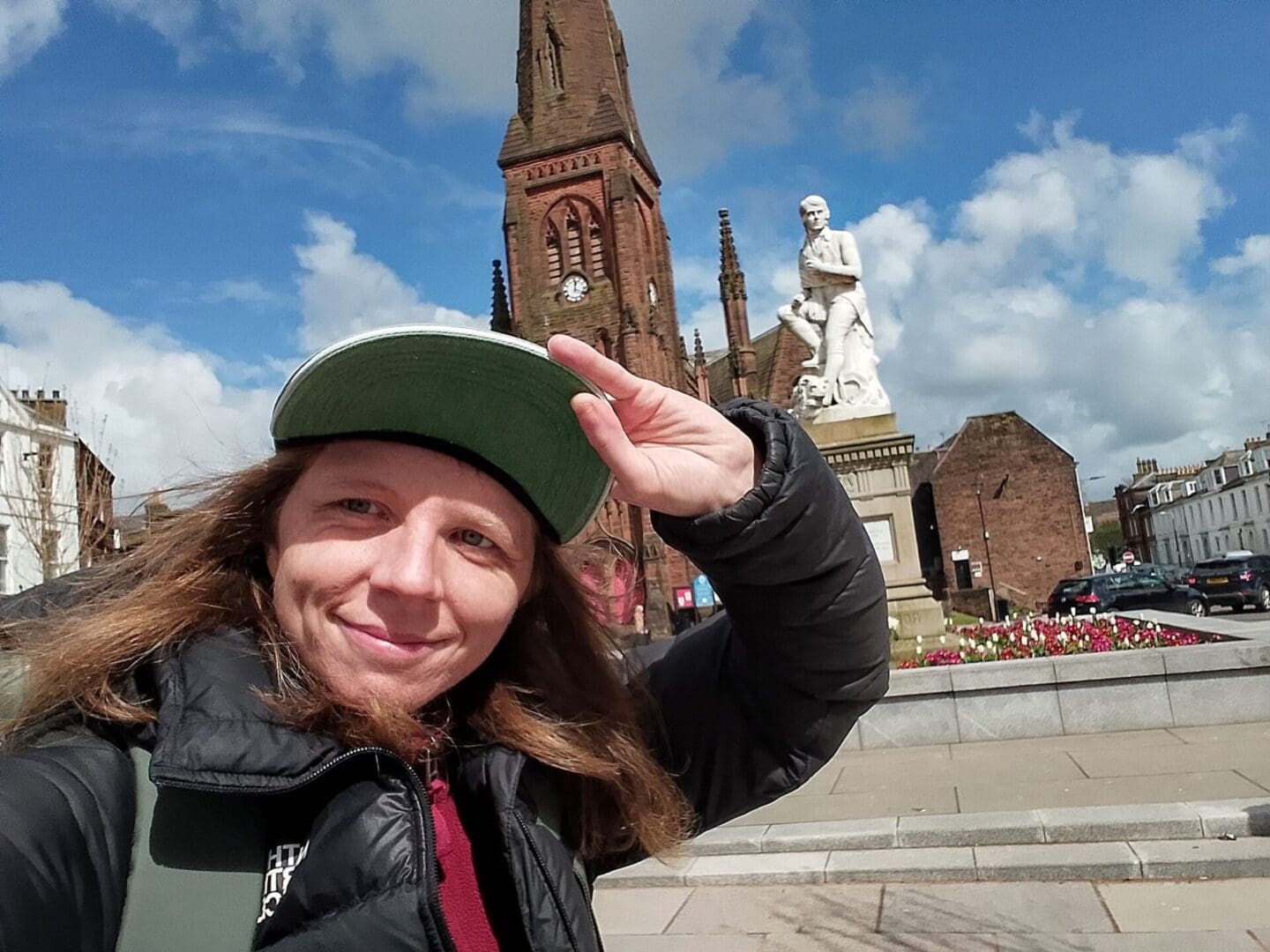
Kate at Dumfries, Scotland, the starting point of her journey. (Photo: EduKate via Facebook)
The people following the journey online have become part of what keeps her going. Kate says having an audience is not the same as having a friend, but it helps her feel that people are thinking about her.
“If we’re talking about mental health and how it can make you feel really isolated, it’s the opposite when you feel that you’ve got a community supporting you,” she says.
Her advice to young people struggling with their mental health is to take the experience seriously, speak to someone they love, and seek medical help if they need it.
“It’s the secrecy of mental health that can really kill you,” she says.
She also wants people to remember that difficult feelings can pass.
“When you’re going through a tough time, you get trapped in a mentality of this is my life,” she says. “No, it’s not. It’s just your day or your week or your month. It’s not your life. It gets better.”
That belief sits behind the journey. Not as a simple cure, or a neat transformation, but as a way of continuing.
Kate says she does not want people to think they need to be extraordinary before they attempt something difficult.
“You don’t have to have it all figured out in life to be able to put your mind to something and get on with it,” she says.
“You don’t need to have any superpowers. You don’t need to be beautiful or super intelligent or super funny. If you’re willing to just get on with something and commit to what you say you’re going to do, that will get you the furthest in life.”