Photo credit: Carlotta Allum
Paid £5,000 to import ecstasy from the UK, Carlotta Allum was met with the police when she landed LAX in 1996. It was here that the city of angels would become her personal hell.
After six months in prison, avoiding a lengthy sentence, and having a baby on the way, Carlotta’s life had completely turned upside down.
With a look into the prison system and first-hand insight of the issues prisoners face, Carlotta was sure of her path following her release.
30 years on, she took me through her time in prison and how that experience gave her the drive to support the most vulnerable.
“I thought, ‘Why would I get caught?’”
Carlotta spent her late teens and early 20s deep within the Manchester nightlife scene:
“I was 16 in 1988, very much involved in the acid house scene, living in the Haçienda nightclub, dating DJs and drug dealers. I was quite obsessed for a while. It was quite a heavy time when things seemed to be allowed more.”
Immersed in this atmosphere at the time of the ‘Madchester’ scene, for her, drugs were a part of normal life:
“It didn’t feel like we were all committing crimes but obviously we were. Drug taking and fast money seemed quite easy.”
The normalisation of drug use brought with it a level of naivety to consequence. Carlotta told me:
“I knew somebody who sold drugs, imported, exported drugs. He persuaded me to get on a plane to America with 10,000 ecstasy tablets.”
“I think sometimes you’re so blinded at that age that you walk into things quite naively without giving it too much thought. I think it was exciting. I like taking risks and didn’t think enough about the consequences and the consequences for life.”
When she landed in California with the tablets strapped to her body, her whole life changed.

Photo credit: Glenn Beltz
“I was absolutely petrified.”
The police knew Carlotta would be arriving with drugs as they had been watching the man who put her on the plane.
The FBI tried to arrange a meeting with the man through Carlotta. When he didn’t show up, Carlotta broke down at the thought of imprisonment:
“I think the first few months even when I thought I was looking at 10 years, I was a wreck. I had to be given sedatives to sleep. I was crying a lot.”
Imprisoned in the Metropolitan Detention Centre in LA, Carlotta spent six months not knowing what her future would be.
“My routine medical showed me to be pregnant.”
Finding out you are pregnant is life-changing in itself, but finding out in a foreign prison where you could be facing up to 10 years is a different story.
But for Carlotta there was a sense of relief:
“When I found out I was pregnant, it was kind of a nice thing. It gave me a nice feeling that I was doing that at least.”,
“My mum and dad came out and were very supportive. I mean, I often think now with children myself what I would have done. My mum was making plans to look after the baby in a trailer park near the prison if it came to it.”
Amidst the chaos and uncertainty, she now had one thing to help her through her time in prison.
“People are more resilient than you think.”
Eventually Carlotta was freed from prison following the capture of the trafficker that convinced her to go on the plane:
“I testified against him. In America you can make a deal, if you get somebody else caught on your charge you can trade in.”
With support from her parents, Carlotta moved back to the UK to give birth:
“Two weeks before my daughter was born they shipped me home. My parents re-mortgaged the house for £30,000, put up bail and I flew home. It went back to court almost a year later and I got time served.”
What was almost 10 years of Carlotta’s life gone for a naive mistake became the opportunity to improve the lives of those like herself.
“Lots of people in prison, nobody cares if they’re there or not.”
After spending time in prison, Carlotta gained an insight into the issues that prisoners, especially women, face. By having a first-hand experience of life in prison, and seeing those less fortunate than her, she knew what she wanted to do now that she was free.
“I had a new drive to help other prisoners because I really felt connected. The trust that you can build from having a similar experience and being able to talk about it, I think it really goes a long way working with prisoners. So it felt like a natural thing to do to work with that community.”
In 2003, Carlotta founded STRETCH, a charity centred around “enhancing the rehabilitation and education of marginalized communities.”. Whilst Carlotta’s experience in the prison system informs how the charity works with prisoners and ex-prisoners, STRETCH goes beyond this- aiming to deliver projects to engage different groups who have suffered social exclusion of all kinds.
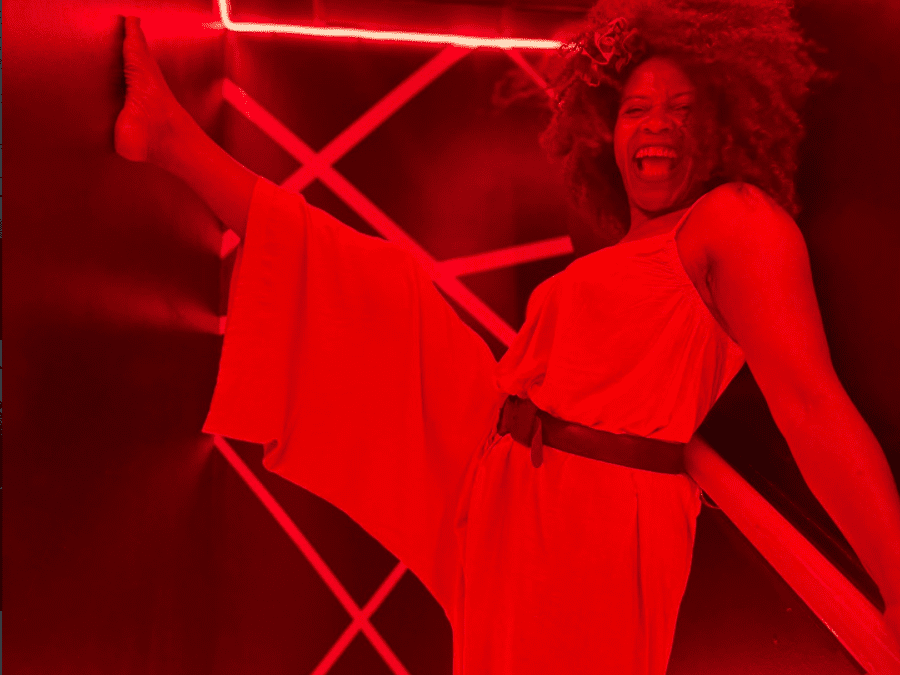
For Carlotta, a self-described ‘artivist’, arts projects are the key to rehabilitating these vulnerable groups
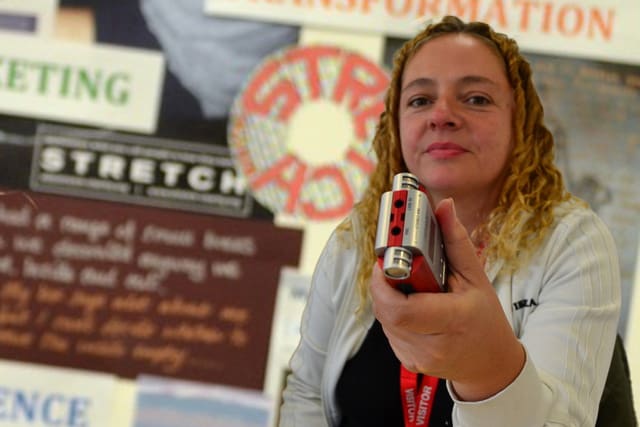
Photo credit: Carlotta Allum
Since its founding, STRETCH, has delivered these arts projects across the UK. Carlotta talked me through the current project the charity is running – ‘The Story Inside’:
“I get them to tell a positive story about themselves and envision a more positive future for themselves. Now it’s become central to my story that part of what people with lived experience should be doing is passing it on and involving themselves in civic activity.”
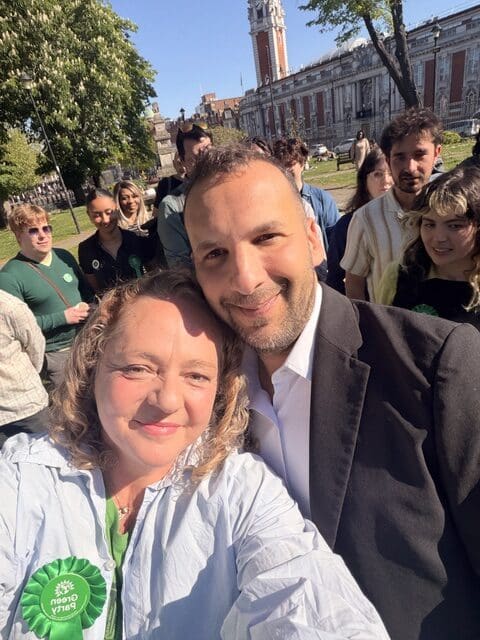
As of 2026 Carlotta has taken her artivism to the political sphere. In May she ran for councillor in her ward of Brixton and Windrush. As a Green Party candidate, she won the seat with the most total votes in the ward.
Speaking on the Green Party’s approach to drug policy, Carlotta said:
“It felt like the Green Party was aligning with my values the most. One of those is a complete rethink of drug policies. If you took the drug addicts out of prison, you’d cure overcrowding. It’s a public health issue rather than a crime issue and the war on drugs hasn’t worked. There’s lots of data out there now, but to think about it differently would be useful.”
Photo credit: Carlotta Allum
Carlotta has not only changed her life since coming out of prison but she has reimagined the ways in which the most vulnerable should be supported.
By combining her passion for art with her insight as a prisoner with fear for her future, she has managed to provide creative outlets for those who are like herself.
Carlotta was a victim of the crime she was arrested for, like many others involved in the drug trade. Her experience and activism highlights a need for compassion for those who may commit crimes out of naivety.
I wondered if Carlotta’s 16-year-old partygoing self would have predicted her life would go this way. She told me:
“I really don’t know what I imagined. I didn’t think that obviously I’d go to prison but I think I might have always thought that I might be involved in activism because I’ve always felt that and I might be involved in the arts. I never imagined that I’d be working with vulnerable people and prisoners. I do find it very rewarding.”
With her newfound political career, Carlotta’s influence has just entered a new dimension. Her potential to reach vulnerable communities has been heightened, her projects are in the spotlight, and her life experience continues to inform her drive to support those who need it.