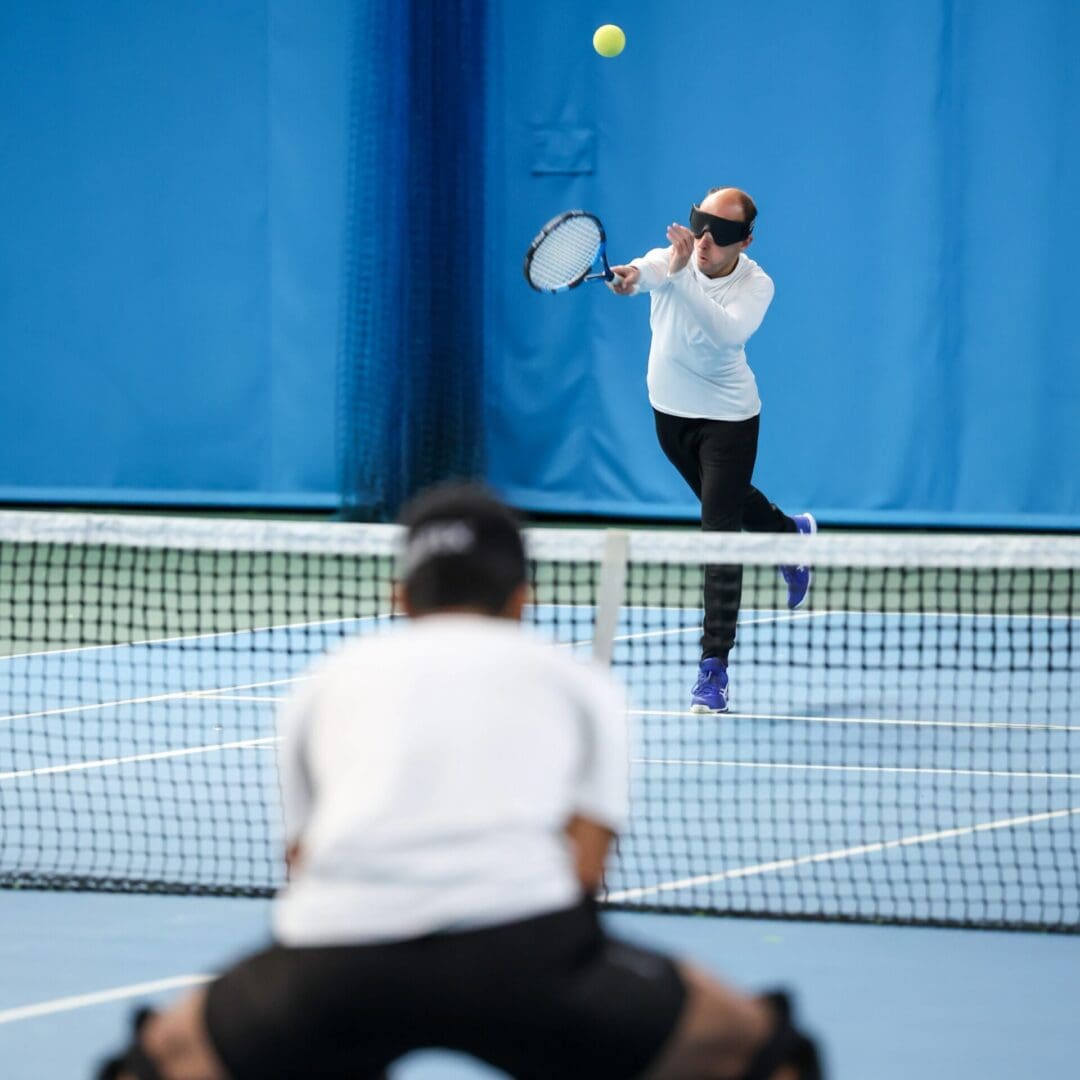
Photo: provided by SYVITC
Across the UK, more than two million people are living with sight loss, and for those who lose their sight in adulthood, the shift can be isolating and hard to navigate.
But with the world of disability sport growing more and more everyday and more people getting involved every year, visually impaired sports are helping people to rebuild their confidence and find a sense of community, and opening up new career paths for people who have had to walk away from their former job.
Read more about career opportunities for disabled and visually impaired people here.
“I’m in a better place now than I was before I lost my sight“
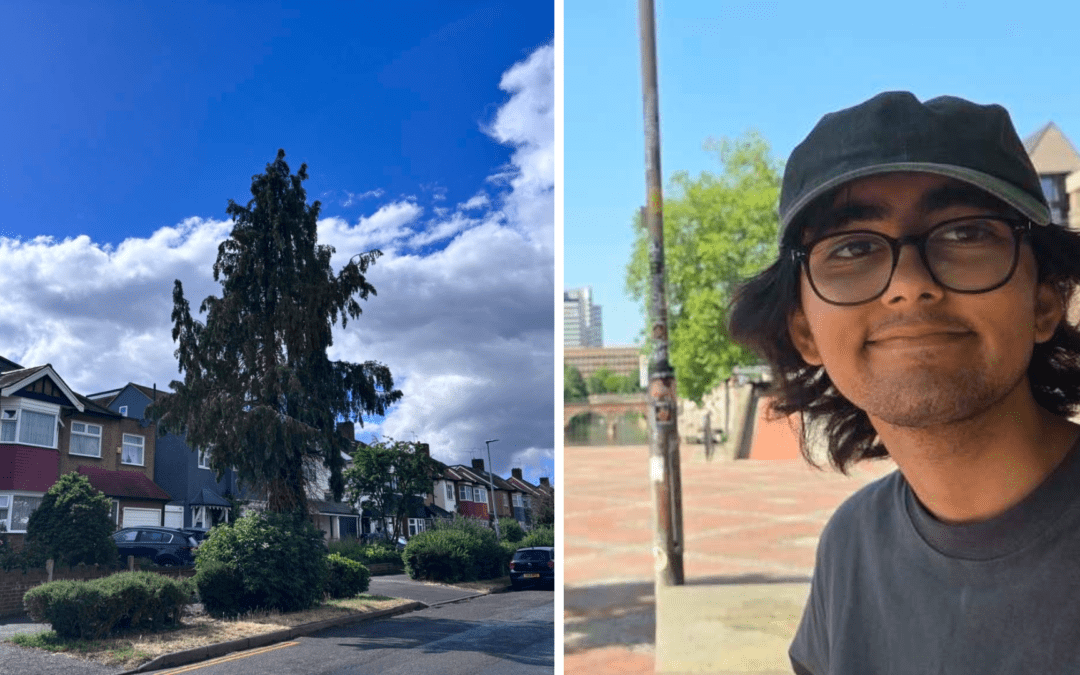
Nomaan Iqbal, 33, from Sheffield is a blind baseball athlete for GB, he contracted bacterial meningitis in 2021 and was placed into a coma which lasted five weeks, when he woke up he wasn’t able to walk, talk or see.
After six challenging months of rehab he began trying out visually impaired sports with the encouragement of Sheffield Royal Society for the Blind (SRSB), and quickly proved to be a natural. What started as a way to rebuild confidence and mobility has become a source of purpose and community, and a reminder that what he thought was the end of one life became the beginning of another.
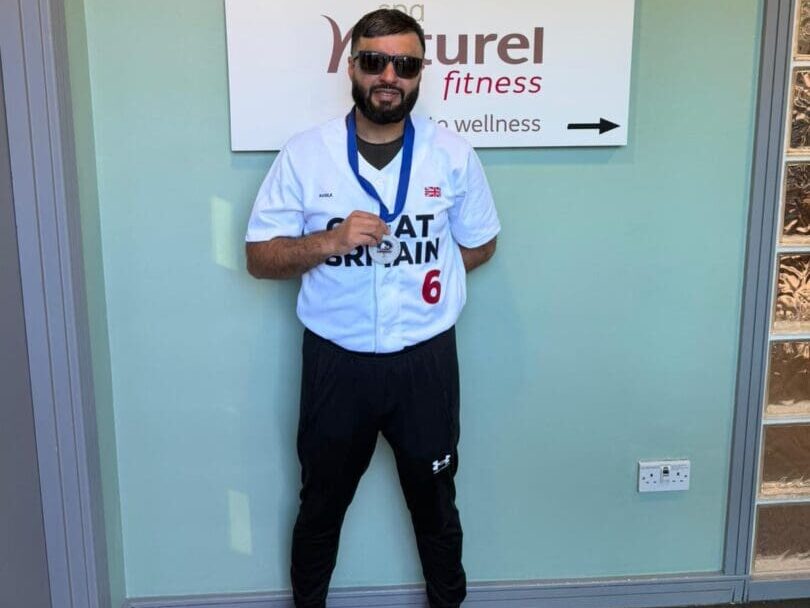
Nomaan Iqbal
When I woke up from my coma I thought I was already six feet under.
I couldn’t see, couldn’t walk, couldn’t talk. I was asking myself if I was still alive.
I barely remember that day I fell into a coma in 2021. My wife says my symptoms worsened until my fever started causing hallucinations which made her call an ambulance. At the hospital they diagnosed me with bacterial meningitis and placed me in an induced coma which I would stay in for the next five weeks.
They told my family I might never wake up. I was suspended between life and death.
When I finally woke up and couldn’t see, I was thinking, “This is it, I’ve gone from this world and they’re going to bury me.”
The days after are a blur but I remember the doctor telling me I’d gone blind and that the nerves in the rest of my body had shut down, meaning I might stay that way forever. It was quite frightening.
Slowly, my nerves started waking up as the inflammation went down in my brain but I would have to spend the next six months in rehab. I felt like a baby, having to crawl around and learning how to walk and talk again.
On top of that, due to lockdown restrictions, my wife could only visit me for one hour a day. For those six months I was basically alone.
I even forgot I had a son at the time
I was asking my wife about my daughter and she said, “What about your son, Idris?” and I kept saying, “Who is he? I don’t have a son.” My son was only three and I lost a few years of memory prior to my illness.
I had to relive some funerals as well. When the rest of my family was finally able to visit me I was asking for my uncle and my cousins reminded me he had passed away. I couldn’t remember so I relived that moment and started crying.
When I got out of the hospital, I was still in a wheelchair and I didn’t want to leave my house. The two things that helped me were faith and sports.
I was introduced to the Sheffield Royal Society for the Blind (SRSB) and being one of those people that doesn’t really shy away from anything I tried blind baseball. The sport is adapted to use balls with bells and bases with unique sounds to direct players running towards them.
Initially I wasn’t interested. I didn’t want to be running around blindfolded, I found it daunting. But now almost five years later I play professionally, traveling to tournaments all over the world and playing for Great Britain in the World Cup.
I almost wasn’t able to play in the World Cup because just before the trials another uncle of mine passed away, meaning I wouldn’t be able to travel. But a miracle happened. Out of any corner of the world they could have chosen to hold it, they chose my hometown, Slough.
That’s when I thought, “Wow, it’s just meant to be.”
Now I’m in a better place than I was before I lost my sight. Which sounds a bit ironic, doesn’t it? How can that be? But I have more of a purpose in my life now. I get to spend more time with my kids and my passport is getting full. I go to so many places.
The purpose that I hold for myself now is: show the world that visually impaired people can also have a life, not just a normal life, an extraordinary life.
I say to other visually impaired people, get yourself out there and watch how things change.
“Being in blind sports gives you a reason to get up in the morning.“
Jerri Mather, 25, from Sheffield is a Showdown athlete, she started playing out of curiosity the day SRSB installed a table at their centre, continued to practice, and before long was scouted to compete for GB. But for Jerri the biggest win hasn’t been medals, it’s the community she found around the table.
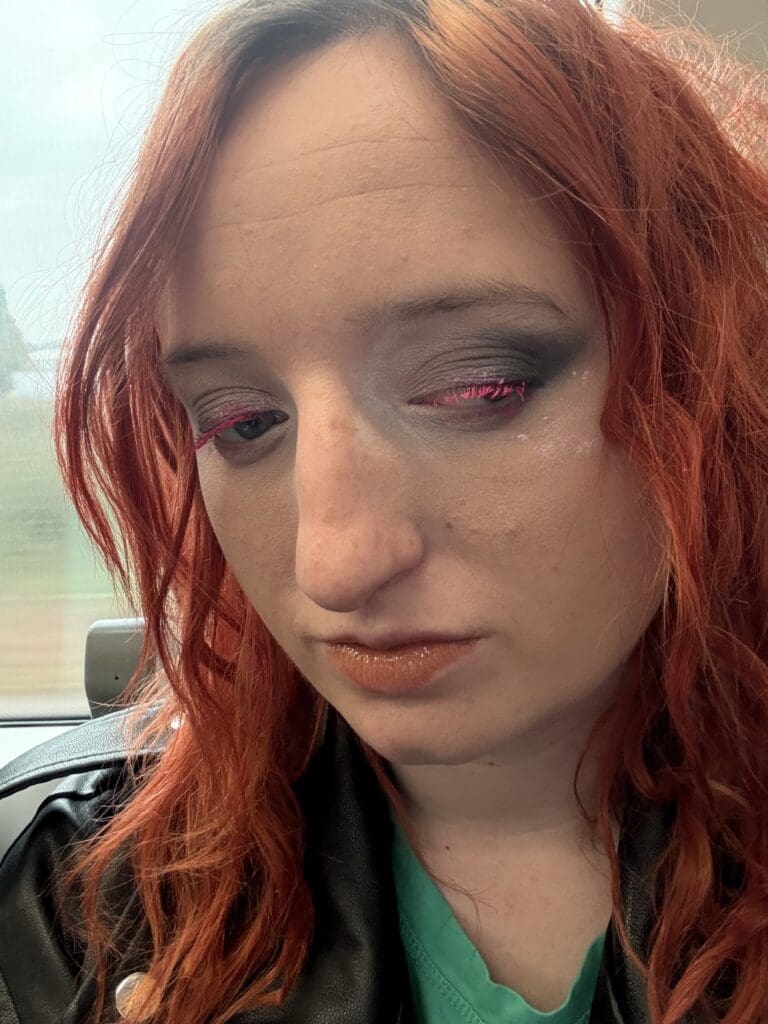
My brain didn’t form properly in the womb so I was born with only 50% vision, which was pretty stable for most of my life. I could only read large print and I used a cane but it was much easier to get around than it is now.
In 2020 a car doing 100mph in a police chase crashed into my taxi that I was taking on the way back from a weekly shop.
Immediately after the crash I had red splotches in my eyes, which I later found out were blood clots that had formed from the impact when I bashed my head on the window. I was taken to hospital but they couldn’t help me so I was left with 20% remaining vision.
Having the accident made me think, “You’ve got to give everything a shot because you only live once.”
I got into Showdown through SRSB. I’ve been going to the centre since I was about six months old and it’s got a very close place in my heart, it’s a place to come where you don’t feel abnormal and you can let out everyday stresses.
They installed a Showdown table three years ago and from the moment I played it I just found it really addictive. It makes you happy but also helps you get any anger out.
Showdown is a fast-paced, blind sport similar to air‑hockey. Showdown is played on a table where two players hit a ball with paddles and try to score by hitting it into their opponent’s goal. The ball makes a rattling sound when you hit it.
I started going to competitions and it was awesome to learn new techniques from other players and make friends up and down the country.
I then got scouted to play in the Prague Spring Championships 2025 and represent GB. It was really cool to see how long other countries had been playing. We got our asses whooped because they had been playing for around 40 years and we only had three years of experience but it was just nice to be doing something you love and representing your country.
“I think being in blind sports gives you a reason to get up in the morning. It gives you something to do, to feel part of the community and feel a bit more normal, like everyday people going to play footy.”
Jerri MATHER
“My life has completely changed because of tennis.“
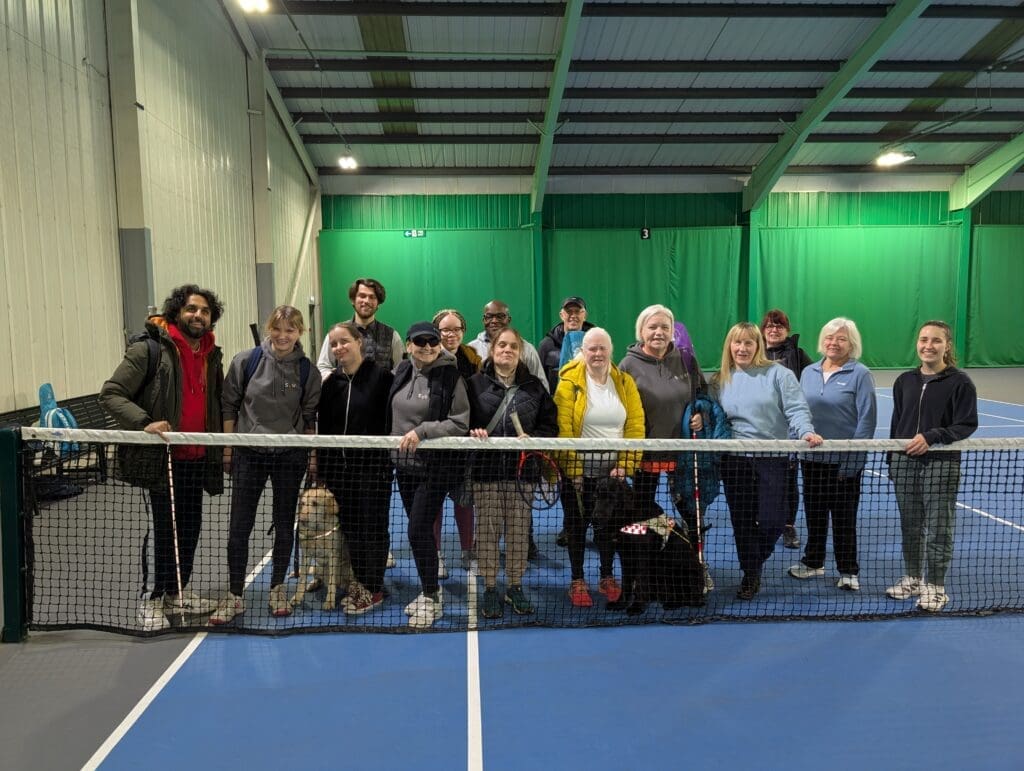
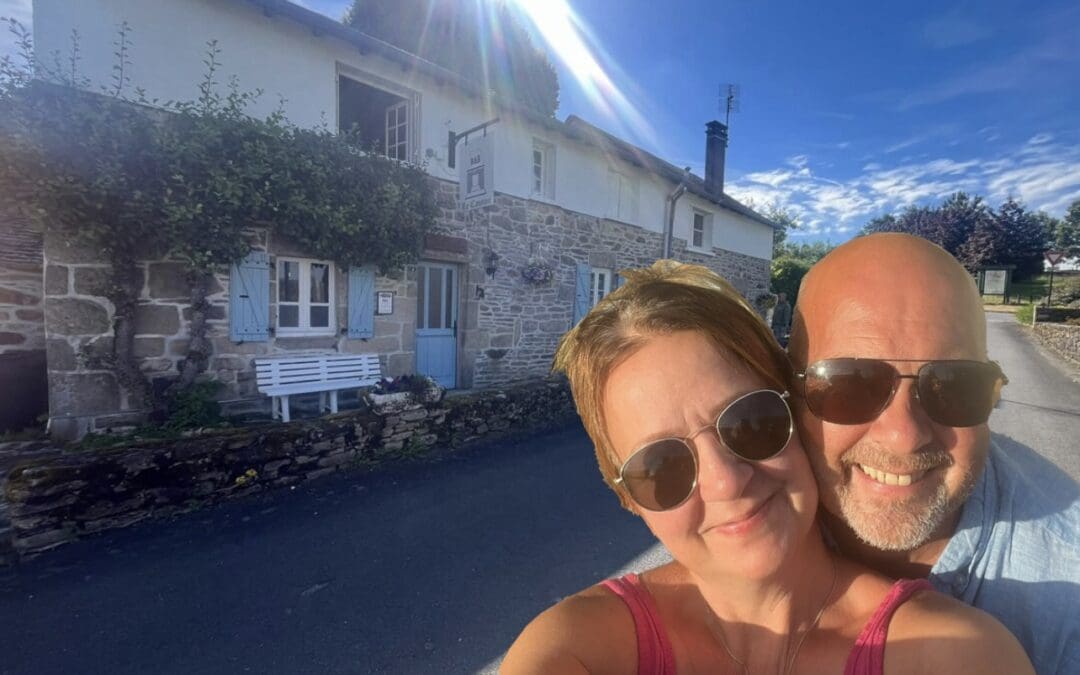
Janiece Wallace , 64, from Sheffield, Founded South Yorkshire Visually Impaired Tennis Club (SYVITC) in 2022 after losing the remainder of her sight made exercising at the gym increasingly difficult.
She’d never even held a tennis racket before, but the moment she tried visually impaired tennis, she was hooked, not just on the sport, but on the sense of community that came with building a club from the ground up.
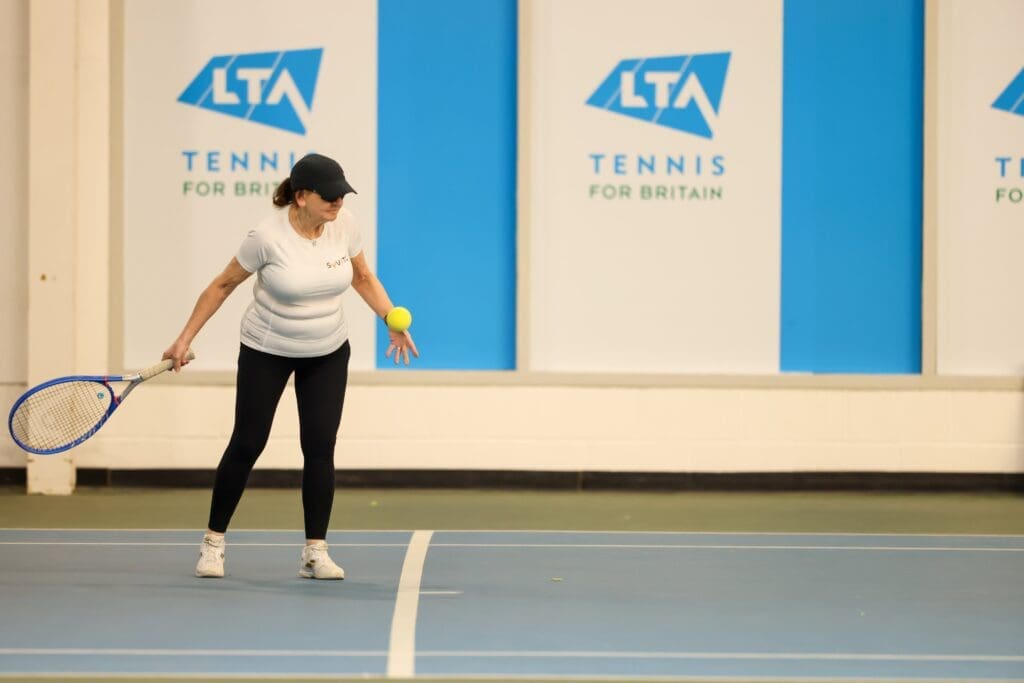
Janiece Wallace at Tennis for Britain: Supplied by Janiece Wallace
Even though I lost my left eye when I was four years old, I never considered myself to have sight loss because I could do most things fully sighted people could do.
But in 2019 on New Year’s Eve, my husband and I were sitting having brunch when I stood up and a blood vessel burst at the back of my eye, damaging my retina. That changed everything forever. I was 57.
The first year was quite a scary time, but I adjusted. I was never one of those people that said: “I can’t do anything now because I’ve got sight loss.” If I couldn’t drive my car anymore, I’d get the bus.
I still loved exercising, but after lockdown I was getting frustrated at the gym because people were telling me to be two metres away and I’d think, “If I could see two metres in front of me, absolutely, but I can’t.”
I decided to try something completely different. I contacted the Lawn Tennis Association (LTA), and they put me in touch with Ben Howarth, who’s now our club coach.
Despite having never played, tennis was the only thing that I could think of doing that was safe. It’s ideal for visually impaired (VI) people because you’re not going to trip over anything; it’s on flat ground.
At the time I knew nothing about tennis, so I said to Ben, “I’m not interested in scoring. I’m not interested in knowing anything about how to play. I just want to exercise in a safe space and have fun.”
Later on I attended a VI Tennis Club in Newcastle with Ben and my husband and was blown away by the size of the club and the social aspect.
I realised up until that point, I had been a visually impaired person dealing with everything on my own. Even my husband, who has been with me for 32 years, as much as he understands me, he doesn’t fully get my sight loss.
We came back from Newcastle and the three of us said, “We’ve got to have this.”
We started our club in 2022, doing monthly sessions on two courts but now we hold weekly sessions on four courts and are the biggest VI Tennis Club in the UK.
VI tennis is played with a larger foam ball that rattles, on a court with tactile raised lines. Players are categorised by sight level allowing up to three bounces for people in lower vision categories.
Our players range from their early twenties to their late sixties, from complete beginners to GB athletes.
It’s been the most rewarding thing that I’ve ever done. When I see other people getting as much out of it as I’m getting out of it, it’s great. I think it’s really beautiful how sport brings people together.
What’s more, the LTA asked me to be a disability advisor last year. So I’m now part of the group that advises the LTA on all things visually impaired.
My life has completely changed because of tennis.