Photo: Uproute Magazine
Constructive journalism is all about exploring the solutions to problems, and providing forward-looking perspectives to our stories.
At Uproute, we aim to put the common good and interests of people at the core of our stories.
We do this by practising constructive journalism, but what does that actually mean?
What is it?
Constructive Journalism is a type of reporting that has been growing in popularity in recent years.
It is an attempt to stop the negativity bias many people feel when reading the news, by changing the questions from ‘What happened’ and ‘Who is responsible’ to ‘What now’ or ‘How can we change’.
Instead of only reporting the problems, constructive journalism aims to report the responses to problems, and explore the change that comes from this.
This applies to highlighting individual people who experienced hardship, and focusing on their journey to reclamation and change.
How did it begin?
In the early 2000s, news avoidance and a negativity bias amongst readers came into discussions within newsrooms.
Academics in the Nordic countries were amongst the first to apply this form of journalism to their writing, a key figure in this was Danish Journalist, Ulrik Haagerup.
He has been a journalist for over 30 years, serving as Editor-in-Chief at multiple publications in Denmark, and in 2017 he founded The Constructive Institute.
The Constructive Institute is a non-profit organisation with a mission to transform traditional journalism through emphasising a more solutions-focused, balanced way of reporting.
In Conversation with Ulrik Haagerup:
Haagerup has published multiple books and academic articles championing why constructive journalism is the way forward within this profession.
He says, “We work with a mission to change the global news culture in order for journalism to help democracy.
“We basically try to look at why is it that mainstream media for so many years filters the world in such a way that we angle our stories on things that are full of conflict.
“Constructive Journalism is an antidote to traditional reporting. It is building on the traditional values of journalism, being fair, balanced, and also keeping power and control.”
The Constructive Institute runs projects aimed at facilitating this change within newsrooms, through fellowship programs, where they invite media professionals to spend an academic year working on constructive journalism projects.
As well as a three year project aimed at engaging 15,000 young people in democracy through workshops in journalism.
“The most important journalistic questions are what happened? Where? How much did it cost? Whose to blame? But Constructive journalism adds to that, and asks questions like what now and how can we move forward? Those questions point to the future,” he says.
He points to misconceptions about this approach, and recognises there can be ‘misunderstandings’ when traditional journalists attempt to apply this to their writing.
He says, “The biggest roadblock for the first years was a deliberate misunderstanding of what constructive journalism means. It can easily be described as happy-go-lucky, floppy journalism.
“They assume it must be an opposition to investigate journalism or critical questioning, but nothing is further away from the truth.”
Haagerup recognises the rise of AI, and highlights how the human element of constructive thinking can actually be a competitive advantage for journalists in the age of artificial intelligence.
“I think AI is the most revolutionary tool humankind has witnessed, and it is also the most dangerous,” he says.
“And for a lot of newsrooms, they now jump with closed eyes into new tech giants, technologies and implement tools that nobody really understands how it works.
“I’m not saying we shouldn’t use AI, because it can be used for research or transcribing interviews that saves time. But if you start writing your story with AI, then you have crossed the line.
“AI is extremely good at telling old stories, journalists are humans and we should tell new stories with passion. So constructiveness here also means using your own curiosity, your passion for storytelling, telling stories to other human beings.”
The Statistics
According to the Press Gazette, the proportion of people selectively avoiding the news is now 10% higher than it was in 2017.
This is the highest level of news avoidance recorded since the Digital News Report by the Reuters Institute began in 2012.
In the same article by the Press Gazette, it stated that a 45 year old woman told the Digital News Report that ‘world news is far too depressing at the moment’.
Similarly, between 2015 and 2024, the proportion of 18-24 year olds using online news weekly fell by 13%, compared to 5% among those in the 55+ age group, according to the Reuters Institute.
This data shows that if we want to sustain journalism for the future, something has to change so that the younger generations want to read and become engaged with news.
How are we implementing it?
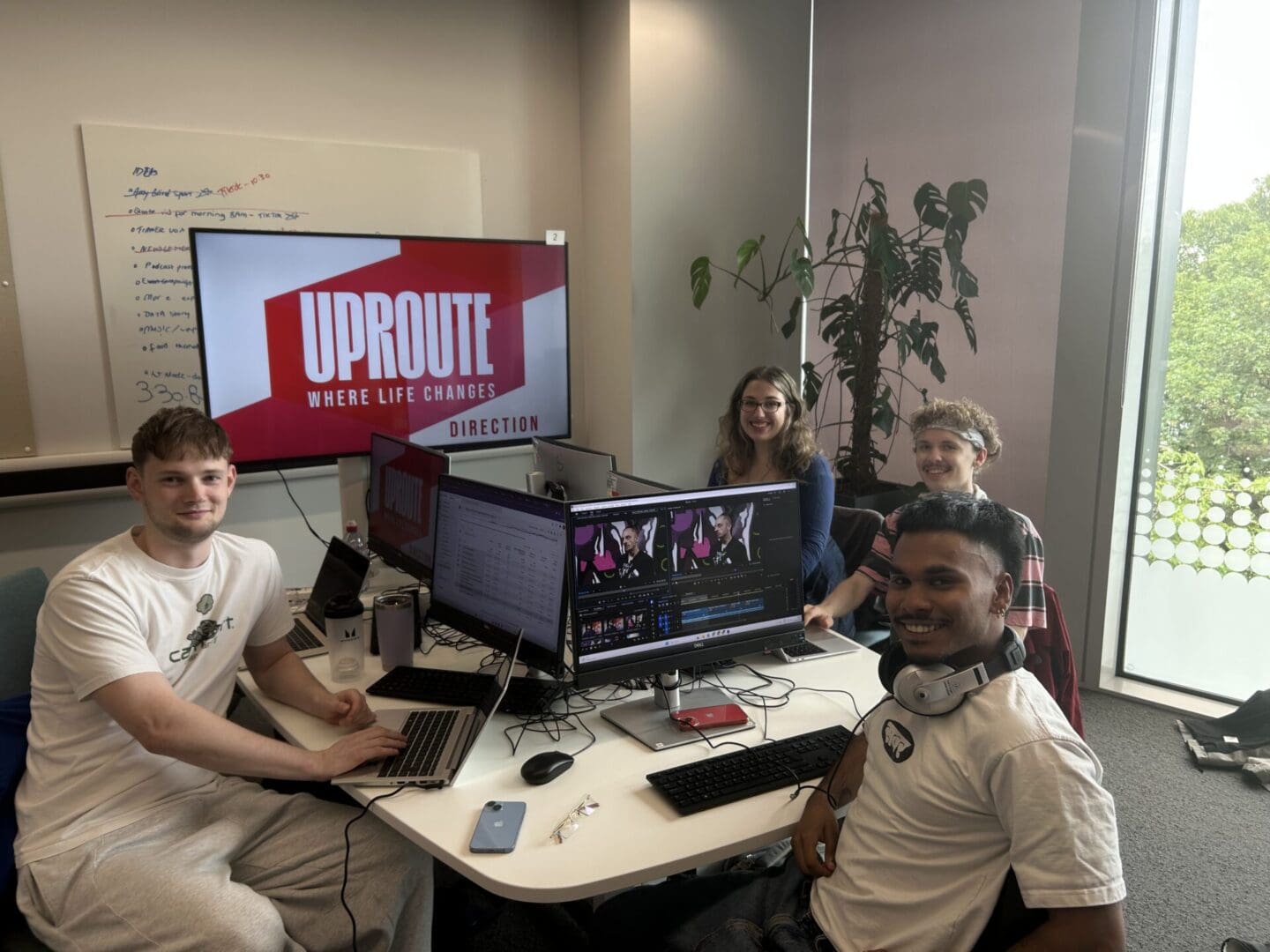
At Uproute, we take a constructive journalism approach to become a place where people can be inspired or find connection through our storytelling.
This applies to our pieces that highlight individual journeys, exploring what people have done in their life to overcome barriers, whether that be systemic or personal.
We aim to provide multiple perspectives and write with a future-oriented approach, to reduce news avoidance and facilitate hope with our audience.
Here are some stories you can read that showcase forward-looking perspectives and overcoming barriers: