
Photo credit: Kylli Kittus via Unsplash
Grief is unavoidable; sooner or later it touches us all, sometimes in small, quiet ways and sometimes in ways that split our lives into ‘before’ and ‘after.’ Uproute sat down with Yasmin O’Keeffe a Grief and Bereavement Counsellor to have an open conversation about grief – and how we can show up better for ourselves and others.
Grief can often feel isolating but more than 54% of UK adults have experienced the loss of a loved one in any given five-year-span according to Cruse Bereavement Support.
It is something that we all experience and yet so many people feel unprepared when it arrives. Unsure of what’s ‘normal,’ and how to cope or support others who are experiencing it. That is why at Uproute are seeking to open up the conversations we rarely have around grief, and answering some of the questions that we don’t often ask but feel deeply when we experience loss.
Yasmin’s own grief journey has shaped her mission as a grief counsellor. In 2023 she had a miscarriage at her 12 week scan, and when she became pregnant again four months later she lost her cousin in the same year. At 38 weeks pregnant her brother went missing and two weeks later her family got the call that he would not be coming home alive.
Just days after his funeral she gave birth to her son. “Holding death and life in the same breath actually showed me a strength I never knew I had,” she writes on her social media account, where she posts videos talking about how to cope with grief.
“I shared this not for sympathy, but just to show what’s possible,” she says. “Grief has broken me open in ways I never asked for, but it also showed me about love, resilience and perseverance.
“I came out on the other side. I now have a son and got married and we are going to buy a house. I just want to show people that it is possible to live a happy life regardless of your losses.”

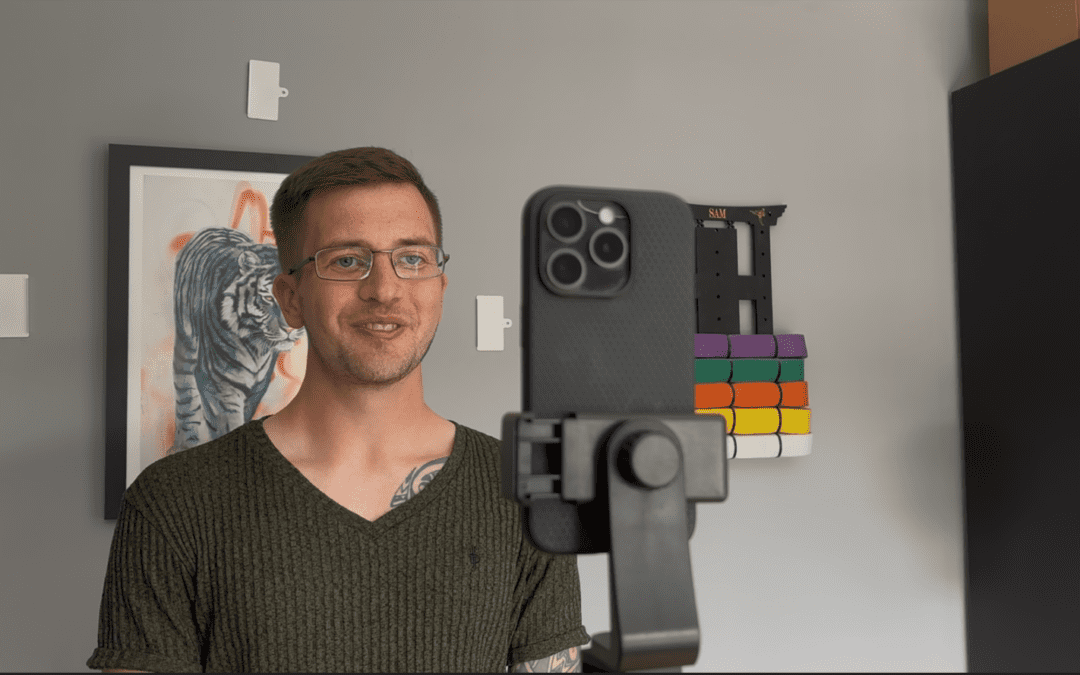
Yasmin O’Keeffe (Photo:Yasminokeeffetherapy via Instagram)
Q. How do you define grief?
“Grief is the natural response to loss. So, that is quite open and vague because it looks different for everyone. It isn’t necessarily like a person or a family member that you’ve lost. It could be a job, loss of security, loss of safety, loss of yourself, loss of identity, loss of autonomy if you’re ill, for example, medical illness. So, it’s just the natural response to loss because we have to be careful to not pathologise it.
“Everybody suffers with grief at some stage, and it doesn’t mean there is something wrong with you when you’re grieving you’re just going through the process. Of course, there’s symptoms and complicated grief that go way beyond what people expect, but generally, grief is the natural response to loss. It’s the symptoms of grief that people find the most difficult,” Yasmin says.
Q. What are some of the most common ‘symptoms of grief’ that you see in people?
“Some people who are grieving can be coping fine with a few tears here and there, but are managing well enough and grief doesn’t always have to always be sadness and despair, I would say grief that you carry with you, the person you lost becomes your grief, talking about them and honouring the memory of them.
“It’s got a bit to do with how your mental state is before the loss because a lot of things that I see crop up with people in grief, it pulls back the curtain of what was already there.
“I do see a lot of kinds of low self-esteem issues and people who are putting others’ needs ahead of theirs and suffering for it, getting burnt out and then not feeling that they have a safe space to express their emotion, so things get suppressed.
Q. When someone has little to no reaction to a loss, what’s actually happening beneath that?
“For some people you could lose someone tomorrow and in a couple of weeks time you’ll be feeling all right and then sometimes there’s guilt that comes with that as well, right? Sometimes people feel why am I feeling okay? Did I not care enough? It feels like we can’t catch a break.
“I felt that way myself like when I had my miscarriage, I felt alright after a few weeks and was questioning why, but in reality it was because I was in a good place mentally that I could integrate grief.
“Grief isn’t just about sadness and despair. You can honor and remember your person every day in any way you want. It doesn’t have to just look like tears and sadness and crying.
“I always say any feeling is valid. There’s absolutely no judgment in that but you need a safe space to do that and that doesn’t always look like therapy. People who are coping may just need a strong support system around them.
“For example, sometimes people feel relief after someone dies, but they won’t be able to express that. Maybe their person was ill and suffering a long time with an illness. It’s okay to feel relief – they’re not suffering anymore – but they won’t necessarily say it to another close family member who would have a different reaction. Grief is so different for everyone.”
Q. How does grief affect our sense of identity and who we understand ourselves to be?
“A lot of things are tied to our identity. If you’re a stay-at-home wife for example, and you’ve lost your husband not only are you questioning now am I still a wife? Am I still married? If the husband was the bread winner for example, you have that loss of financial stability, if there’s not things in place, maybe they have to go back into the workforce.
“So, they’re grieving that life that they thought that they would have, maybe they have to navigate going back to the workforce or sending their children to child care. They’re grieving not spending as much time with the kids.
“That’s just an example of how that can manifest and I think can be quite traumatic because not only if you’re lost your husband in that example you’re dealing with secondary loss. It’s what we call secondary loss.
“That life that you thought you’d have, that time that you’d spend with the kids, that version of you.”
Q. In your videos, you talk about ‘grief tax’ – what is it, and how does it show up in people’s lives?
“Grief tax really is all the extra mental, emotional, and physical effort and energy it takes to kind of do daily things.
So, for example, you’re watching a movie and you leave the room because it was a sad moment or putting on a face for the kids because you don’t want to see them crying. That effort of putting on a face is the tax. It’s all that extra energy. You’re weighing up the situation and then you’re putting on a smile, and that’s exhausting.”
Also read: Life reshaped by loss: A mother turns grief into action against knife crime crisis
Q. How can we better support friends or family who are grieving?
“I would say anyone close to you is asking them what they want. People often go into assume mode and think ‘I would want this’ but you shouldn’t assume that is what they need.
“Don’t just say: ‘let me know if you need anything’ as that puts a lot of mental load on people.
“You could just offer to pick them up a takeaway or check in on them, but don’t expect a reply, because that’s increasing their mental load. That’s putting another thing on their never-ending to-do list. It’s just thinking how we can just improve and be more mindful about the impact of what we say”
Q. Why do so many people struggle to know how to approach or support someone who’s grieving?
“I think we’re all very grief illiterate in our society. We don’t learn about emotional intelligence and grief in school even though grief is going to affect everyone, and the sooner we learn to be comfortable with it, the better our responses and support will be for people.
My point really was that it’s better to say something than nothing but also just being mindful about what we say. Even just being honest and saying, ‘I’m not sure if this is the right thing to say and I hope this comes across in the way that I mean. Let me know if this didn’t land.’
“But the more that we just talk about it and name it as grief and normalize it, we realize we’re more equipped to help people than we think.
“Yes, grief is all different, but the reactions to grief, there there’s common threads that we can identify with. Maybe just not on the extreme level, but we all have experienced some type of grief in our lives.
“And I think that is the goal of my posts, is just to normalize it, to make it more accessible, but also to be honest and raw about it,” she says.
Q. What do you think of the saying ‘Time heals all wounds’?
“I think people mean those kinds of things, but I don’t think it’s true, because we still see people years later struggling, missing their person or really deep still in their grief.
“So I always say it’s not the time that heals, it’s what you do with that time if you work on yourself.
“I think that can be empowering because it means you can start today, you can start next week. Of course, you’re not going to just try if your person died that day, but you don’t have to wait for years and years to just magically feel better.
“You can take grief by the reins and work on yourself which I think is liberating, but there needs to be a mindset shift to that.”
Q. In your view, what can grief counselling offer that people often can’t access on their own?
“Grief is really physical and you can’t just always authentically express your emotions, but finding time to just be you is why counselling can be so beneficial.
“You’re promising yourself an hour a week for just you. You don’t have to filter or edit what you’re saying to suit someone else.
“If you’ve lost, for example, your husband, that was also someone’s son, that was someone’s father, that was someone’s friend. So, you’re trying to edit the conversation depending who you’re talking to. In therapy, you can just be, no grief tax required. And if you want to come on and cry or just sit there in silence or just say, ‘f*** this.’ It’s how the emotions get processed, so it can be so powerful,” she says.
Q. Can you explain what your Phoenix programme is and who it’s designed for?
Yasmin launched her Phoenix program earlier this week and has already welcomed 15-20 people who signed up. A response that conformed just how many people who are looking for a space to explore their grief outside traditional therapy.
“I wanted to do something for every one of my followers who wanted support that was ethical, legal, and affordable. So, I started a community, Phoenix, which has tools and resources, practical tips for people that can do it at their own pace,” she says.
“It’s for people who maybe don’t want therapy or are afraid of therapy to kind of dip their toe into understanding their grief more. Because I think if you can understand grief and what it is and that kind of is the first step really towards healing, isn’t it?
“I just want to be able to reach as many people as possible and capture people, anywhere, to let them know it doesn’t have to be the end of your story.”
There is a lot to cover when it comes to the topic of grief and we haven’t been able to cover a myriad of topics in this short Q&A but if you want to know more about grief, go to Yasmin’s page on Instagram where you can find a number of helpful videos and resources.