
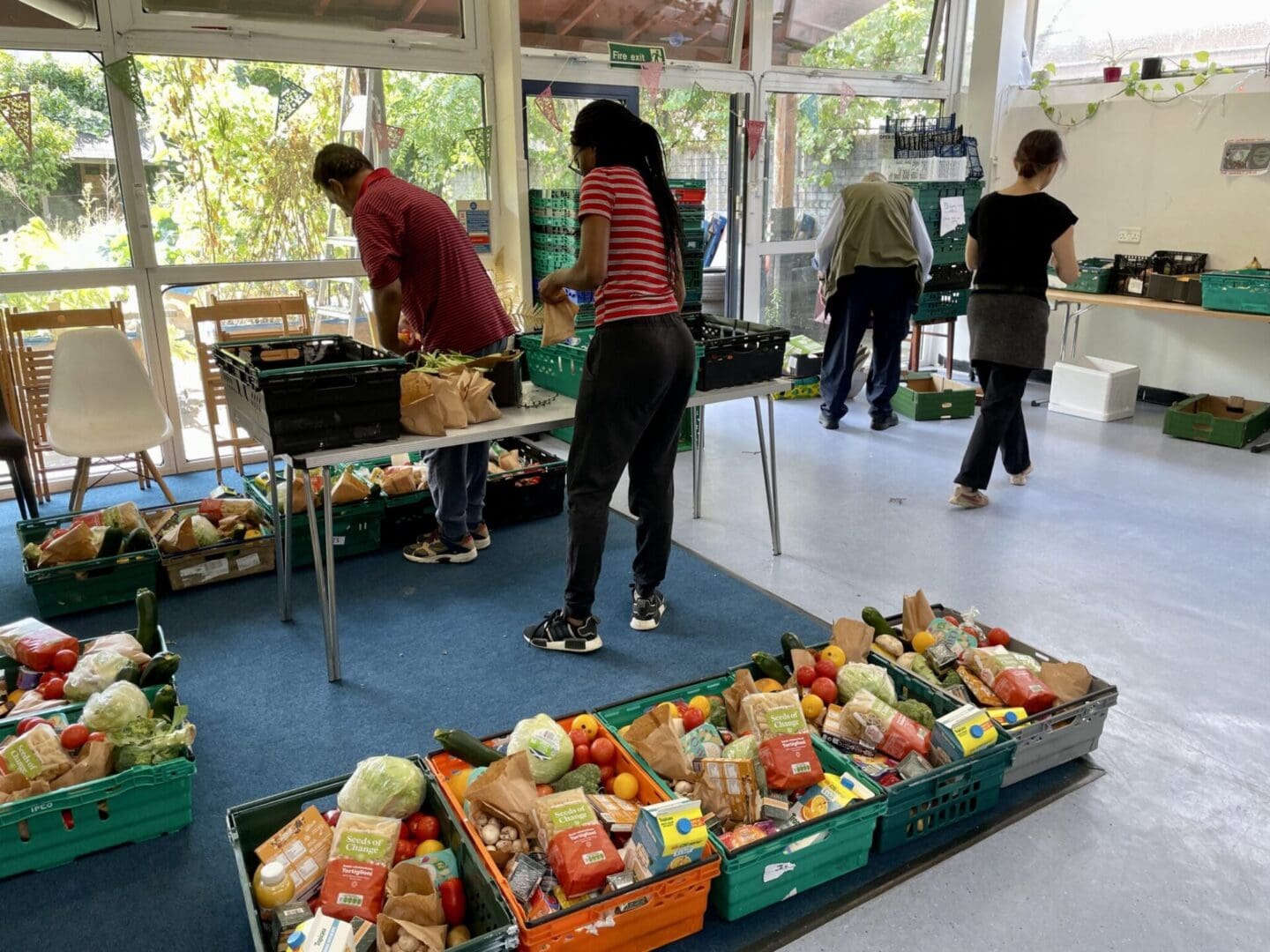
Photo: Cooperation Town
According to The Broken Plate Report 2025 the most deprived fifth of the population would need to spend 45% of their disposable income on food to afford the government-recommended healthy diet. This has led to a rising trend of people using foodbanks in the past decade, leaving people relying on charity for their next meal.
But food cooperatives are have come up with an alternative method of food provision, and according to Cooperation Town Sheffield all you need to set one up it work is a a few people and some determination.
Food co-ops are independent not-for-profit groups run by the community which contribute collectively to purchasing food and feed it to themselves at significant discount with a focus on affordability, sustainability and shared goals.
They can operate in many different ways with some buying purely surplus food, obtained from suppliers like Fairshare or Olio. Or other groups buying food in bulk. While some groups do a bit of both.
Mikee Whitson, co-ordinator of Cooperation Town Sheffield says: “We’re about going into areas where co-ops don’t exist to let people know about the community power that can exist if they work together.”
The groups fund themselves, everyone chips in a few pounds each week and which give the co-op funds to buy a mass amount of food from a wholesaler and distribute it back to their group at an inexpensive price. A box of food worth £15-20 can now be sold for £2.
“You basically only need three things to set up a food co-op: food supply, venue, and a group of people.”
Launched in 2009 on an estate in Kentish Town in north London with the aim of promoting solidarity in place of charity, Cooperation Town discovered demand was high for affordable food.
Since then they have been one of the organisations pioneering the creation of food co-ops in the UK and currently have over 50 autonomous co-ops in their network.
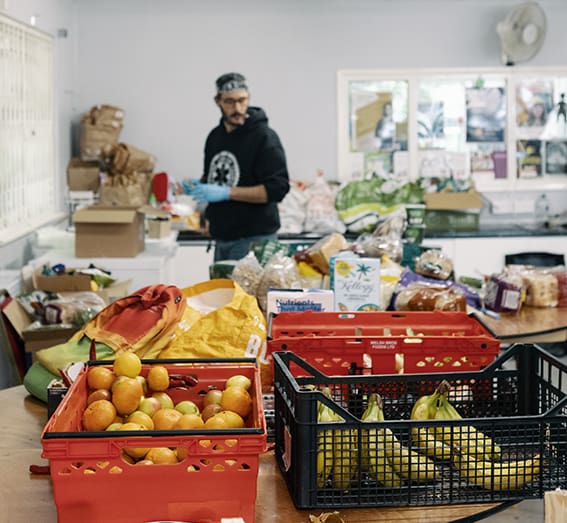
Photo provided by Cooperation Town
Voluntary Action Sheffield (VAS) decided to support Cooperation Town because they wanted to look at an alternative model of food provision to food banks which rely on donations and a charity model. Food co-ops offer a sustainable and democratic alternative to food banks, members agree on what food to purchase, collect and distribute supplies, unload deliveries, manage payments, keep records and keep their space clean, working as a community to support each other.
“The dependency a food bank creates can be inherently flawed. If you’re giving food out for free, there can be a lack of funding which is not sustainable, and when that food bank closes what happens to the people who used it?” Mikee says.
“Success in my job is setting a cooperative up and leaving it to run itself. Of course at first there might be some sort of structure that needs to be put into the group, like who’s going to do the register? who’s going to divide the food? But sustainability is the key to this whole thing.
“You give people the connections, the resources, the power of their own decision making and you create systems that can pay for themselves,” he adds.
One of the hurdles to food coops is having free, long-term access to a community space. More than 1,200 publicly owned buildings, including libraries and community centres, were transferred to voluntary groups between 2010 and 2020, according to Locality. Many more have closed outright.
The trend has accelerated in recent years, with councils citing budget pressures and shifting priorities.
“I think there has been an ever-increasing decline in community spaces and community connection. Our society has been progressively more and more individualised over the last 30 years. We lost our community centres at the same time as we have the ability to never leave our house with everything becoming possible to do online,” says Mikee.
But food co-ops have also given community centres that were at risk of shutting down a new purpose.
“I think if you create the spaces for people to meet, they’ll fall back into them. People may say there is no demand for this, but of course there’s demand. Loneliness is through the roof and people living on their own don’t get out. I believe the solution is public diners, community kitchens, food co-operatives, sports teams, anything you can do to bring people together. Here in Sheffield we’ve had community spaces that were unused, now being used by a food co-operative.”
If you want to start your own food co-op you can do your own research and gather a group of friends, neighbours, or colleagues to get onboard. You can also get in touch with Cooperation Town who can give you advice on the topic here.
You can read more food-related stories here